


What's Happening?
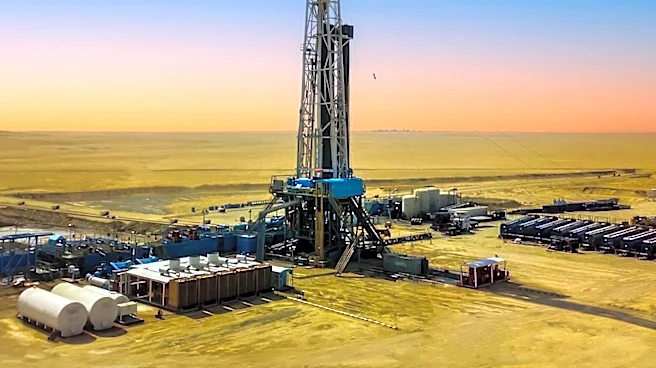
Chevron (CVX) is advancing two significant deals to expand its upstream oil and gas portfolio: an agreement to take over operations at Iraq's West Qurna 2 oilfield, one of the country's largest reserves, and a nearly $5 billion transaction to acquire
a majority stake in Beacon Offshore Energy's deepwater Gulf of Mexico portfolio. These strategic moves are consistent with Chevron's existing narrative of focusing on low-cost upstream barrels and disciplined deal-making. The West Qurna 2 oilfield is estimated to hold 14 billion barrels, and the deepwater Gulf of Mexico acquisition further strengthens Chevron's presence in a key region. These projects align with Chevron's strategy of capital-efficient growth and portfolio high-grading, similar to its operations in Venezuela, the Permian Basin, and the Tengiz field.
Why It's Important?
These acquisitions are crucial for Chevron as they significantly reshape its long-term upstream asset mix and risk profile, reinforcing its position as one of the world's largest integrated energy companies. By expanding control over large upstream projects, Chevron feeds its wider network of refining, marketing, and chemicals businesses, integrating these international field deals into an already diversified energy platform. For investors, this means Chevron's earnings will remain tightly tied to commodity cycles, which presents a potential risk if energy demand or pricing weakens faster than current analyst models predict. However, the focus on low-cost, long-life oil projects aims to secure future production and maintain a competitive edge in the global energy market.
What's Next?
Chevron is expected to provide further details on these acquisitions, including targeted returns, ramp-up timelines, and how these fields integrate into its broader strategic plan, during upcoming investor updates and quarterly calls. These discussions will likely address the financial implications, operational synergies, and risk management strategies associated with these new assets. The company's ability to effectively integrate these large-scale projects and manage potential geopolitical risks, particularly in Iraq, will be critical. The market will be closely watching for how these deals contribute to Chevron's multi-year production and capital spending targets, especially in the context of its recent acquisition of Hess and ongoing cost reduction efforts.
Beyond the Headlines
The pursuit of large, long-life oil projects in diverse geographical locations like Iraq and the Gulf of Mexico highlights the complex interplay between energy security, global supply dynamics, and corporate strategy. While these deals offer Chevron substantial reserves and production potential, they also expose the company to geopolitical instabilities and the inherent volatility of commodity markets. The emphasis on 'low-cost upstream barrels' reflects a broader industry trend towards maximizing efficiency and profitability in a carbon-constrained world. However, the long-term implications for Chevron's carbon footprint and its alignment with global climate goals will remain a significant consideration, as the company balances its traditional fossil fuel business with increasing pressures for sustainable energy transitions.