


What's Happening?
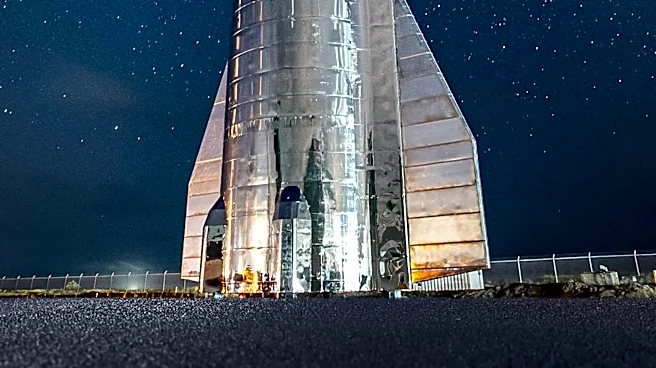
SpaceX CEO Elon Musk has revealed plans for a substantial upgrade to the Starship spacecraft following its partly successful Flight 15. The proposed enhancements include a 40% increase in the spacecraft's size, which is projected to boost its payload
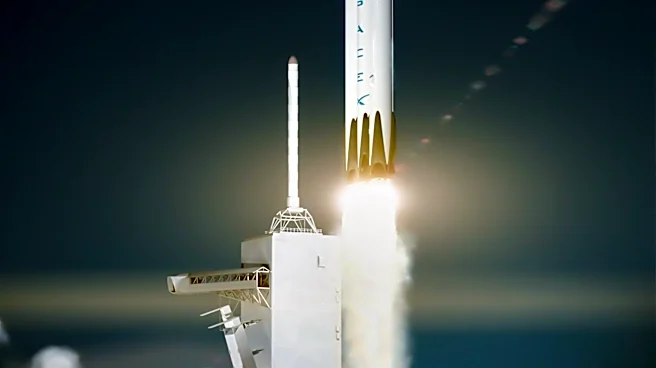
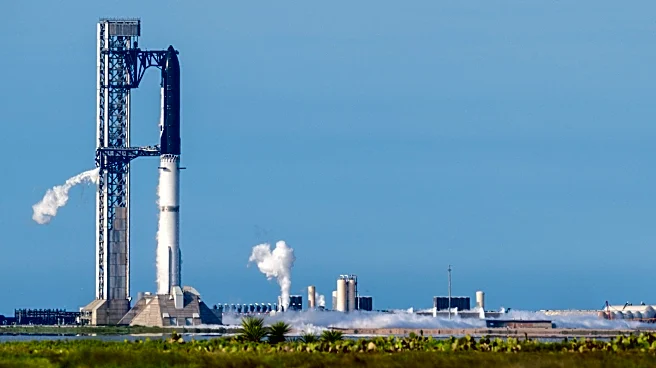
capacity to 140 tons. Alternatively, this size increase could translate to a 60% increase in fuel capacity, significantly extending Starship's range and potentially enabling lunar missions. Furthermore, SpaceX intends to triple the number of Raptor engines on board, increasing them to nine, and will also upgrade their performance. This development comes after Flight 15 achieved the first-ever tower capture of the spacecraft by Mechazilla upon its return to space. The company is also noting significant progress in the reusability of Starship, with only one heat shield tile sustaining significant damage during reentry in Flight 15, indicating a very low failure rate and suggesting quicker refurbishment times.
Why It's Important?
This announced upgrade to Starship holds significant implications for the space industry and future space exploration. A 40% increase in payload capacity would dramatically lower the cost per kilogram to orbit, further solidifying SpaceX's position as a leader in cost-effective space launches. The extended range, potentially reaching the Moon, could accelerate lunar exploration and resource utilization efforts, opening new avenues for scientific research and commercial ventures. The improved reusability, evidenced by minimal heat shield damage, is crucial for achieving SpaceX's long-term goal of making space travel as routine and affordable as air travel. This could democratize access to space, fostering innovation across various sectors, from satellite deployment to space tourism and interplanetary missions. Competitors in the space launch market will face increased pressure to innovate and reduce costs to keep pace with SpaceX's advancements.
What's Next?
Following the announcement, SpaceX will likely proceed with the design and engineering phases for the upgraded Starship. The next steps will involve detailed development of the larger airframe, integration of the increased number of more powerful Raptor engines, and rigorous testing of the new components and systems. Future test flights of Starship will be critical in validating these upgrades and demonstrating the enhanced capabilities, particularly the increased payload capacity and extended range. The company's stated goal of achieving 'zero expected refurbishment' and 'immediate reusability' will drive ongoing design tweaks and operational refinements. Success in these areas could lead to more frequent and cost-effective launches, potentially accelerating the timeline for ambitious missions such as lunar landings and eventual Mars colonization. The space community will closely watch for updates on the development and testing of this significantly upgraded Starship.
Beyond the Headlines
The continuous evolution of Starship, particularly with such substantial upgrades, points to a broader paradigm shift in space exploration. The pursuit of larger payloads and enhanced reusability is not merely about efficiency; it's about fundamentally altering the economic and logistical barriers to space access. This could lead to the establishment of permanent lunar bases, large-scale orbital infrastructure, and even the beginnings of a space-based economy. The technological advancements in heat shield durability and rapid refurbishment are critical for making space travel sustainable and routine, moving beyond the current model of expensive, single-use launches. This trajectory could also spur significant advancements in materials science, propulsion technology, and autonomous systems, with potential spillover benefits for terrestrial industries. The long-term vision of making humanity a multi-planetary species hinges on the success and continuous improvement of vehicles like Starship, pushing the boundaries of what is currently considered possible in space travel.