





What's Happening?
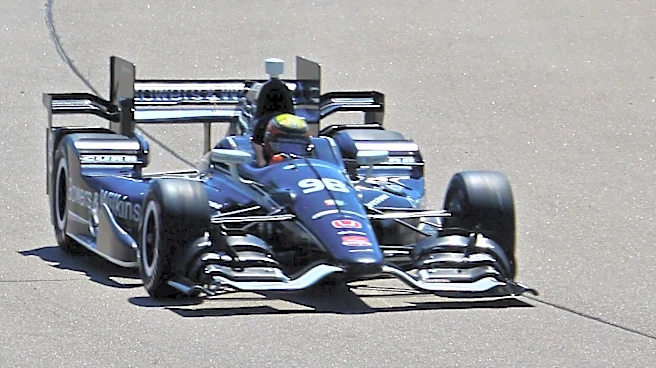
NTT IndyCar Series driver Alexander Rossi recently had the opportunity to test drive the new Dallara IR-28 chassis at the Indianapolis Motor Speedway. Rossi, known for his reserved demeanor, expressed excitement about the new car, likening the experience
to 'Christmas morning.' The IR-28, set to debut in 2028, features a completely new chassis, aerodynamics, electronics, and a spec damper package. Rossi praised the car's aesthetics and performance, noting that it exceeded expectations despite challenging weather conditions during the test. The car's design aims to integrate modern safety advancements while maintaining the aggressive look and feel of an IndyCar. Other drivers, including Marcus Ericsson and Will Power, have also expressed enthusiasm about the new chassis, highlighting its potential to enhance the racing experience.
Why It's Important?
The introduction of the IR-28 chassis represents a significant evolution in IndyCar racing, promising to enhance both safety and performance. The new design is expected to attract more fans and potentially new manufacturers to the sport, contributing to its growth. The integration of advanced safety features with a modern, aggressive design could set a new standard in motorsports, influencing future developments in racing technology. For drivers, the IR-28 offers improved handling and comfort, which could lead to more competitive and exciting races. The positive reception from drivers and teams suggests that the IR-28 could play a crucial role in maintaining IndyCar's reputation for close, thrilling races.
What's Next?
As the IR-28 chassis undergoes further testing, drivers and teams will continue to explore its capabilities and refine its performance. The car is scheduled to make its official debut in the 2028 season, giving teams ample time to adapt to its new features. The ongoing development and testing will likely involve feedback from drivers to optimize the car's performance across different tracks and conditions. The anticipation surrounding the IR-28's debut could lead to increased interest and viewership in the IndyCar series, potentially attracting new sponsors and partners. The successful integration of the IR-28 into the series could also encourage other racing leagues to adopt similar advancements.