







What's Happening?
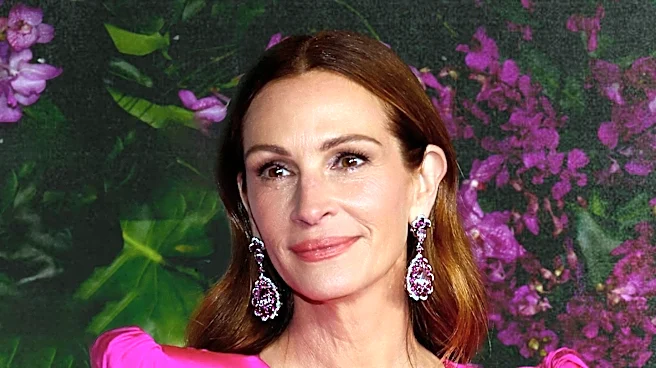
In 1991, following her global success with 'Pretty Woman,' actress Julia Roberts was determined to star in 'Shakespeare in Love.' She accepted the role of Viola De Lesseps but made a non-negotiable condition: Daniel Day-Lewis must play William Shakespeare.
Roberts, then 23, was seeking to establish herself as a serious dramatic actress, and Day-Lewis, fresh off an Oscar win for 'My Left Foot' and known for his Method Acting, represented the credibility she desired. To convince him, Roberts sent 24 red roses and a note reading 'Be my Romeo' to his London home. However, Day-Lewis had already committed to Jim Sheridan's film 'In the Name of the Father' and, adhering to his strict professional code, declined the role. Roberts' insistence led to a prolonged search for a suitable lead, with her rejecting numerous prominent English actors, including Hugh Grant, Colin Firth, Rupert Graves, and Ralph Fiennes, because none met her expectations set by Day-Lewis. The production ultimately stalled when Roberts, dissatisfied with the casting process, abruptly left the set and returned to Los Angeles, leading Universal Pictures to halt the project after spending six million dollars.
Why It's Important?
This incident highlights the significant power and influence top-tier Hollywood stars like Julia Roberts wielded in the early 1990s, capable of dictating casting choices and even halting major film productions. It underscores the intense pressure on actors to gain critical acclaim and shed commercial labels, as Roberts sought to transition from a 'pretty woman' to a respected dramatic actress by associating with an acclaimed method actor. The story also illustrates the clash between artistic integrity and commercial demands, with Day-Lewis prioritizing his commitment to another project over a high-profile role sought by a major star. The eventual shelving of 'Shakespeare in Love' for several years due to casting disputes demonstrates how individual decisions and star power could profoundly impact a film's trajectory, delaying its production and ultimately leading to a different cast and crew, as seen when Gwyneth Paltrow later won an Oscar for the role Roberts had initially championed.
What's Next?
The 'Shakespeare in Love' project remained dormant until 1998 when Miramax, under Harvey Weinstein, revived it with a new script by Tom Stoppard and cast Gwyneth Paltrow in the lead role. Paltrow's performance ultimately earned her an Academy Award for Best Actress in 1999, a testament to the film's eventual success despite its tumultuous early development. Julia Roberts would later achieve her own Oscar for Best Actress in 2001 for her role in 'Erin Brockovich.' This historical event serves as a case study in Hollywood's evolving dynamics, where star power, creative vision, and industry politics intersect. Future productions continue to navigate similar challenges, balancing the demands of leading actors with budgetary constraints and artistic goals. The legacy of this casting saga underscores the enduring impact of individual choices on cinematic history and the careers of those involved.
Beyond the Headlines
The 'Shakespeare in Love' casting controversy delves into deeper themes of artistic validation and the pursuit of credibility within the entertainment industry. Julia Roberts' fervent desire for Daniel Day-Lewis was not merely about finding a co-star but about leveraging his reputation to elevate her own artistic standing, challenging the perception that she was solely a commercial star. This reflects a broader societal tendency to categorize artists and the struggle many face to break free from typecasting. Day-Lewis's unwavering commitment to his 'Method' acting, even at the cost of a high-profile role, speaks to the dedication and sometimes extreme measures artists take in their craft. The story also subtly touches on the gender dynamics of Hollywood at the time, with Roberts, a powerful female star, attempting to assert her creative vision in a male-dominated industry. The eventual success of the film with a different cast highlights the serendipitous nature of filmmaking and how initial setbacks can sometimes lead to unexpected triumphs, reshaping careers and cinematic narratives in unforeseen ways.