


What's Happening?
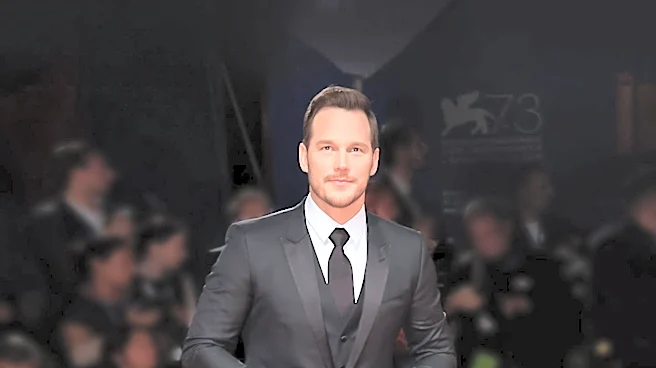
Actor Chris Pratt employed a full body fat suit, a mullet, and full silicone prosthetics to portray the overweight character 'Disgusting Donald' in the film 'What’s Your Number?'. The effects house, Alterian Inc., responsible for the transformation, detailed
the practical approach taken for the role. Despite the character appearing briefly on screen, the creative team opted for extensive prosthetics to achieve a realistic portrayal of a character intended to appear close to 400 pounds. Pratt also wore a mullet to enhance the flashback sequence's dramatic nature. This method allowed for the desired physical appearance without requiring the actor to gain a significant amount of weight, a common practice in Hollywood where advancements in prosthetics offer realistic alternatives to extreme physical transformations for actors. Pratt's comedic abilities were also crucial in bringing the character's animated and dancing sequences to life.
Why It's Important?
This approach highlights a significant trend in the entertainment industry where practical effects and prosthetics are increasingly used to achieve character transformations, offering an alternative to actors undergoing drastic weight changes. This is important for actor well-being, as extreme weight fluctuations can pose health risks. By utilizing body suits and prosthetics, filmmakers can maintain realism while prioritizing the health and safety of their talent. It also showcases the evolving artistry of special effects, demonstrating how detailed and convincing such transformations can be. For audiences, it means a more immersive experience without the ethical concerns sometimes associated with actors' physical sacrifices for roles. The decision to use prosthetics for 'Disgusting Donald' underscores a commitment to character integrity through technical craftsmanship rather than solely relying on an actor's physical alteration.
What's Next?
The continued advancement and adoption of sophisticated prosthetics and body suits in film and television are likely. As technology improves, these methods will become even more seamless and realistic, potentially reducing the pressure on actors to undergo significant physical changes for roles. This could lead to a broader range of actors being considered for roles that traditionally required specific body types, as physical appearance can be more easily modified. Furthermore, the success of such practical effects may encourage more productions to invest in specialized effects houses like Alterian Inc., fostering innovation in the field. This trend could also influence acting training, with a greater emphasis on physical comedy and movement to complement prosthetic work, as demonstrated by Pratt's performance.
Beyond the Headlines
The use of body suits and prosthetics for character portrayal raises interesting discussions about authenticity in acting and the ethics of representation. While it protects actors from potentially harmful physical transformations, it also touches on the broader conversation about how different body types are depicted in media. The ability to 'simulate' an overweight character, for instance, can be seen as a double-edged sword: it avoids health risks for the actor but might also bypass opportunities for actors who naturally fit the physical description. This practice also underscores the collaborative nature of filmmaking, where an actor's performance is often enhanced and shaped by the work of skilled technicians and artists in special effects. It challenges the traditional view of an actor's sole responsibility for a character's physical manifestation, highlighting the integral role of behind-the-scenes craftsmanship.