





What's Happening?
Jill Brown, a 59-year-old board-certified health and wellness coach, personal trainer, and Pilates instructor, has identified four strength-building exercises she believes are crucial for women over 50. Brown, who states she is currently the strongest
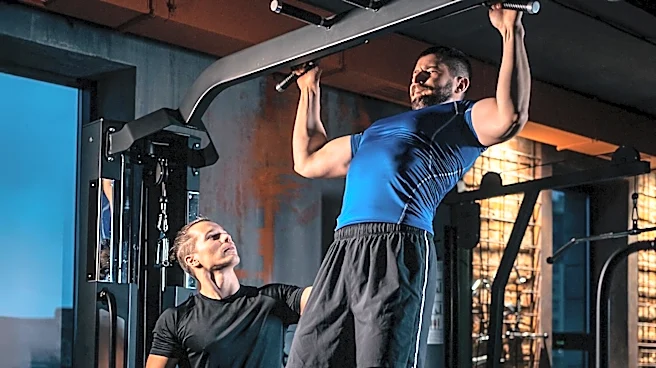
she has ever been, aims to provide more original advice than typical strength training recommendations. Her suggested exercises include the Bulgarian split squat, sled push, Australian pull-up (inverted row), and push-up. Brown emphasizes that these exercises are safe for individuals with past injuries, as she herself has undergone multiple surgeries on her spine, hip, shoulder, and wrist. She also provides at-home alternatives for each exercise, making them accessible without specialized gym equipment. For instance, a sturdy chair or sofa can be used for Bulgarian split squats, and a heavy box can substitute for a sled push.
Why It's Important?
These recommendations are significant for promoting healthy aging and longevity among women over 50. Strength training is a critical component of maintaining physical function, bone density, and overall well-being as individuals age. Brown's focus on exercises that can be modified for home use and are safe for those with previous injuries broadens the accessibility of strength training. This approach can help reduce barriers to exercise, such as gym access or fear of injury, encouraging more women to incorporate strength training into their routines. The emphasis on balance, full-body strength, and core engagement in her chosen exercises directly addresses common age-related concerns like fall prevention and maintaining functional independence, contributing to a higher quality of life.
What's Next?
As awareness of the importance of strength training for older adults grows, more fitness professionals and health organizations may adopt or adapt similar accessible exercise recommendations. Individuals seeking to improve their strength and overall health can begin incorporating these exercises into their routines, utilizing Brown's provided at-home modifications. The fitness industry might see an increased demand for equipment and programs tailored to home-based, injury-conscious strength training. Further research could also explore the long-term benefits and adherence rates of such tailored exercise programs for the over-50 demographic, potentially leading to more widespread adoption in public health initiatives and personal fitness plans.
Beyond the Headlines
The advice from Jill Brown highlights a broader shift in fitness philosophy towards more inclusive and adaptable exercise regimens, particularly for aging populations. It challenges the conventional notion that intense, gym-centric workouts are the only path to strength, demonstrating that effective training can be achieved with minimal equipment and consideration for individual physical limitations. This approach fosters greater autonomy in health management and encourages a proactive stance on aging. Ethically, it underscores the importance of personalized fitness advice that accounts for diverse physical histories and accessibility needs, moving beyond a 'one-size-fits-all' model. Culturally, it could contribute to destigmatizing aging and physical limitations, promoting the idea that strength and vitality are attainable at any age through thoughtful and informed exercise practices.