






What's Happening?
The North Carolina Utilities Commission has approved two-year rate plans for Duke Energy Carolinas and Duke Energy Progress, leading to projected residential electricity rate increases of approximately 9.5% and 9.3% respectively, effective January 2027.
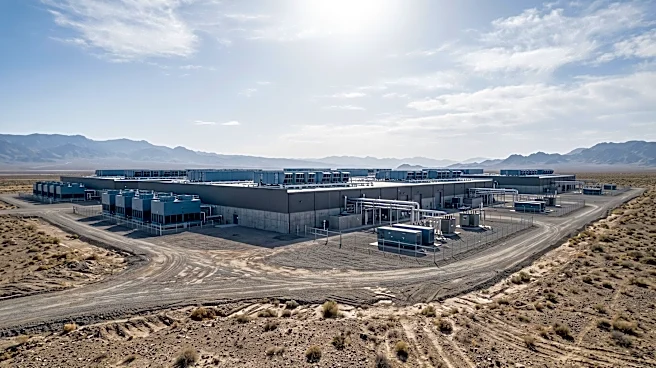
These rate hikes are part of negotiated settlements that reduced Duke Energy's initial requests. Alongside the rate increases, the commission has established new rules specifically for large data centers with power demands of at least 50 megawatts. These rules aim to ensure data centers shoulder more of the financial risks associated with their growing energy demand, which is driven by artificial intelligence and cloud computing. The new requirements for data centers include minimum payments based on at least 75% of contracted power demand, long-term contracts of 10 to 15 years, upfront payments for exclusive infrastructure, financial guarantees for transmission upgrades, and exit charges for early contract termination. Duke Energy will also contribute $20 million in shareholder funds for electricity bill assistance and home repairs for low-income households.
Why It's Important?
These approved rate increases will directly impact Duke Energy customers across North Carolina, leading to higher monthly electricity bills. For a typical residential customer using 1,000 kilowatt-hours per month, this could mean an additional $11.19 to $15.51 per month by 2028, totaling $134 to $186 in additional annual costs. This financial burden is particularly significant for low-income households, some of whom are already struggling with high utility costs. The new rules for data centers are a critical development, as they represent a regulatory effort to address the substantial energy demands of the tech industry and prevent these costs from disproportionately falling on other customers. The rapid expansion of data centers, accounting for 92% of Duke's contracted demand between March 2024 and April 2026, necessitates billions in new infrastructure. By requiring data centers to bear more of these costs and risks, the commission aims to protect residential customers from potential financial liabilities if data center demand fluctuates or projects are abandoned.
What's Next?
Duke Energy is required to submit revised revenue calculations within 10 days and updated rate schedules for approval within 30 days. The new rates are set to take effect on January 1, 2027. Duke Energy is evaluating the data center provisions and will continue working with stakeholders on implementation. Environmental advocates have welcomed the new financial requirements for data centers but are calling for additional measures, such as requiring data centers to pay for their own new clean energy and batteries, to avoid the need for new gas plants. The rate decisions also coincide with the approval of Duke's long-term energy plan, which includes extending the operation of some coal plants and adding new natural gas generation, alongside solar and battery storage. The planned merger of Duke Energy Carolinas and Duke Energy Progress into a single utility on January 1, 2027, will also shape the future energy landscape in the state.
Beyond the Headlines
The North Carolina Utilities Commission's decision reflects a growing national challenge: how to manage the immense energy demands of the burgeoning data center industry without unduly burdening residential consumers. This move sets a precedent for other states grappling with similar issues, highlighting a shift towards holding large industrial consumers more accountable for their infrastructure impact. The emphasis on financial guarantees and long-term contracts for data centers signals a recognition of the potential volatility in this sector and the need for robust protections for the broader ratepayer base. Furthermore, the call from environmental advocates for data centers to fund their own clean energy sources points to a broader societal expectation for sustainable growth, pushing the tech industry towards greater environmental responsibility in its energy consumption. This regulatory action could influence future energy policy and infrastructure development across the U.S., balancing economic development with consumer protection and environmental sustainability.