





What's Happening?
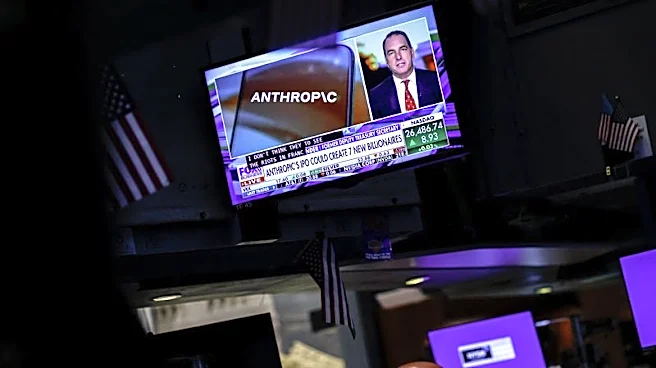
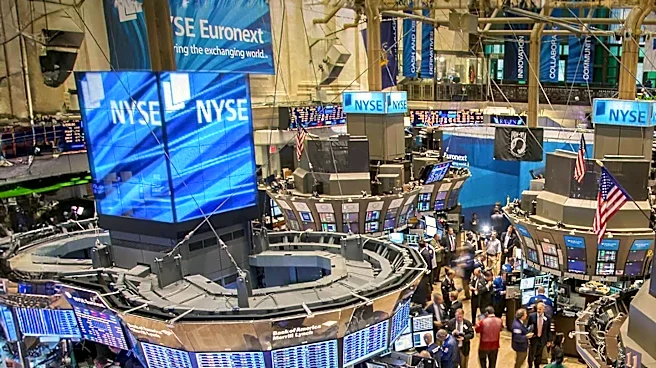
Anthropic, a five-year-old AI lab, recently completed a record-breaking initial public offering (IPO), raising $81.3 billion. This IPO is seen by many as a significant event for the AI trade, especially after a period of market instability. However, a major
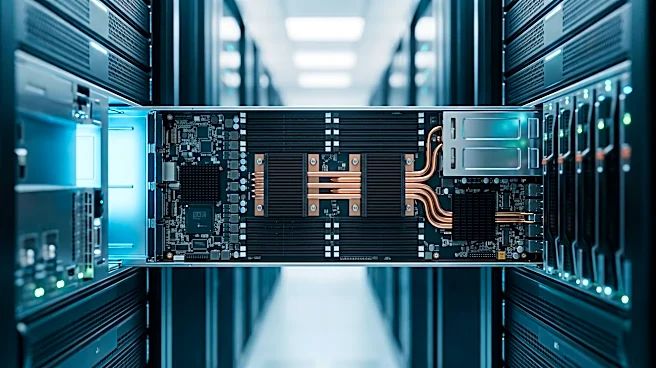
challenge for Anthropic is securing sufficient computing power to support its rapid growth and model development. The company has committed to approximately $900 billion in compute and infrastructure deals, with about half of that cost expected by the end of 2030. A portion of these deals, around $186 billion, are contingent on factors like financing, facility acquisition, or regulatory approvals. Recent filings indicate potential hurdles, including Lambda missing a deadline for a $34.9 billion facility lease agreement and Nscale lacking binding financing commitments for its $44 billion contracts with Anthropic. These issues raise concerns about the timely delivery of necessary computing capacity.
Why It's Important?
The uncertainty surrounding Anthropic's access to computing power has significant implications for the company's future and the broader AI industry. Delays in securing compute capacity could impede Anthropic's growth trajectory, potentially leading to reduced revenue and increased reliance on more expensive short-term computing solutions. This could impact the company's profitability and its ability to maintain its competitive edge in the rapidly evolving AI landscape. For the public markets, Anthropic's IPO was a crucial test for valuing pure-play AI labs. Any significant setbacks in its operational capacity could influence investor confidence in other AI companies. The situation also highlights a broader industry challenge: the immense demand for specialized computing resources, particularly GPUs, required for advanced AI development, and the complexities involved in scaling such infrastructure.
What's Next?
Anthropic will need to navigate the complexities of its existing compute and infrastructure agreements, particularly those with conditional terms. The company's ability to ensure that its 'neocloud' partners, such as Lambda and Nscale, secure the necessary financing and facilities will be critical. While analysts like Nick Patience of Futurum Group suggest that the financing risk primarily lies with these partners, the timely arrival of capacity remains a key concern for Anthropic. The company also has substantial long-term commitments with hyperscalers like Amazon and Google, which are also significant investors in Anthropic, providing an incentive for these partners to deliver. However, any slippage in smaller deals could still force Anthropic to rely on more costly short-term compute, impacting its margins and growth in the coming years, particularly through 2027-2028.
Beyond the Headlines
The challenges faced by Anthropic underscore a fundamental tension in the AI industry: the insatiable demand for computational power versus the practicalities of infrastructure development and financing. This situation could lead to a re-evaluation of investment strategies in AI, potentially favoring companies with more secure or vertically integrated compute resources. It also raises questions about the sustainability of rapid AI growth if the underlying infrastructure cannot keep pace. The reliance on 'neoclouds' and the financial risks associated with their ability to deliver highlight the intricate web of dependencies within the AI ecosystem. Furthermore, the growing public opposition to major data centers, as mentioned in the source, suggests potential future regulatory or community-based hurdles for AI infrastructure expansion, adding another layer of complexity to the industry's long-term planning.