



What's Happening?
Peter Thiel's hedge fund, Thiel Macro, has made a substantial investment of $76 million in Vista Energy, an Argentine oil company. This investment represents nearly 1.2 million shares, or approximately 1% of the company, making it the second-largest position
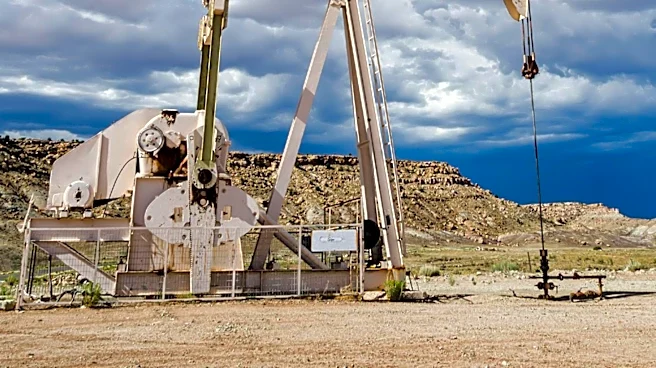
in Thiel Macro's $419 million portfolio, surpassed only by Amazon. Vista Energy is a key player in Argentina's shale boom, currently producing around 160,000 barrels of oil equivalent per day, with about 70% designated for export. The company's operations are centered in Vaca Muerta in Patagonia, which holds the world's second-largest shale gas and fourth-largest shale oil resources. Vista has already invested over $6.5 billion in Argentina and recently increased its investment and production forecasts. This move is particularly notable as Vista is the only non-U.S. company in Thiel Macro's holdings, according to Bloomberg.
Why It's Important?
This significant investment by Peter Thiel's fund highlights a growing interest in the Argentine energy sector, particularly its shale oil and gas resources. For U.S. investors, it signals potential opportunities in emerging markets and the energy transition landscape. Thiel's bet on Vista Energy, alongside other power and energy companies in his portfolio, suggests a broader strategy to capitalize on increasing energy demand, potentially driven by advancements in artificial intelligence and new data centers. The timing of this investment is also crucial, as Argentina's President Javier Milei is actively promoting the expansion of pipelines and export infrastructure, which could directly benefit companies like Vista by enabling increased crude oil sales to international buyers. This could lead to a re-evaluation of investment strategies in the energy sector, with a focus on regions with robust resource bases and supportive government policies.
What's Next?
The investment by Thiel Macro is likely to draw further attention to Argentina's energy sector, potentially attracting more foreign capital and accelerating the development of its vast shale resources. As President Milei continues to push for infrastructure development, Vista Energy and other companies involved in the country's oil and gas production are poised to benefit from enhanced export capabilities. This could lead to increased production and revenue for Vista, potentially driving up its stock value. Furthermore, Peter Thiel's broader interest in Argentina, evidenced by his meeting with President Milei and his property acquisition in Buenos Aires, suggests potential for additional investments and deeper engagement in the country's economic reforms. This could influence other major stakeholders, including U.S. businesses and investors, to explore similar opportunities in Argentina, particularly in the energy and infrastructure sectors.
Beyond the Headlines
Peter Thiel's investment in Vista Energy extends beyond a simple financial transaction; it reflects a strategic bet on the future of global energy and the potential of non-traditional markets. His focus on a diverse portfolio of energy companies, including those involved in oil, power, and nuclear reactors, indicates a belief in a multifaceted approach to meeting future energy demands, rather than solely relying on renewable sources. This challenges the prevailing Silicon Valley narrative that often prioritizes clean energy exclusively. The investment also underscores the geopolitical and economic implications of energy independence and resource control. As global energy needs continue to rise, particularly with the expansion of AI and data centers, securing diverse energy sources becomes paramount. Thiel's move into Argentina's oil sector could be seen as a long-term play on the enduring importance of fossil fuels in the global energy mix, even as the world transitions towards greener alternatives.