









What's Happening?
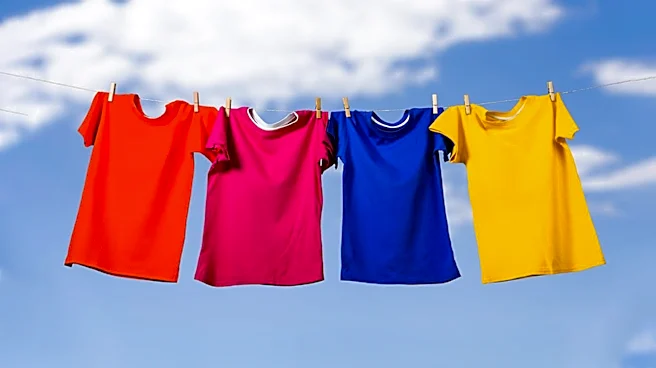
A recent analysis highlights the financial benefits of air-drying clothes, which can save American households between $100 and $200 annually on electricity costs. The report emphasizes that while air-drying is eco-friendly and cost-effective, its success
depends on choosing the right setup for one's climate and living space. In dry climates, air-drying is straightforward, but in humid areas, additional measures like using a dehumidifier may be necessary to prevent musty smells and prolonged drying times. The article also compares different drying setups, such as wall-mounted lines and freestanding racks, noting that wall-mounted lines are more space-efficient and effective for full loads, while freestanding racks are more suitable for smaller spaces or as secondary options.
Why It's Important?
The shift towards air-drying clothes reflects a growing trend of eco-conscious living and cost-saving measures among American households. By reducing reliance on electric dryers, families can significantly cut down on their utility bills and extend the lifespan of their clothing, which is often damaged by the heat of dryers. This practice not only benefits individual households financially but also contributes to broader environmental goals by reducing energy consumption. As more people adopt air-drying, there could be a notable decrease in national energy demand, aligning with efforts to promote sustainable living practices.
What's Next?
As awareness of the benefits of air-drying grows, it is likely that more households will explore this option, especially in light of rising energy costs. Manufacturers may respond by developing more efficient and user-friendly air-drying solutions, such as improved retractable lines or innovative dehumidifiers. Additionally, there could be increased advocacy for building designs that incorporate air-drying facilities, particularly in urban areas where space is limited. This trend may also influence policy discussions on energy conservation and sustainable living practices.