
What's Happening?
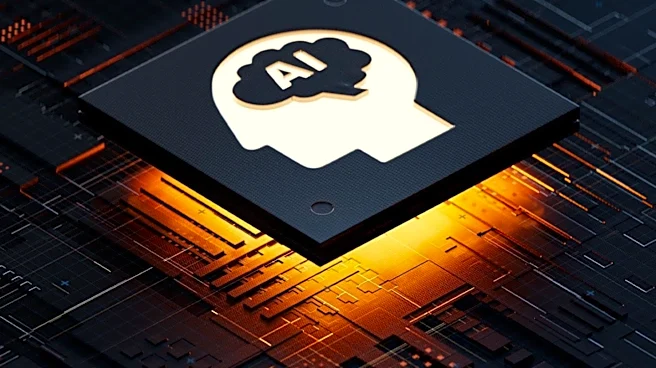
Hollywood is increasingly integrating artificial intelligence (AI) into its production pipelines, prompting both concern and optimism among screenwriters and educators. While the 2023 WGA and SAG-AFTRA
strikes highlighted fears of job displacement and AI's impact on creativity, many industry professionals and academic institutions are now exploring AI as a tool for enhancing storytelling and production. Dara Resnik, a veteran writer, openly discussed her 'quiet and effective' use of AI in a Substack post, noting its pervasive but often unacknowledged use in the industry. She views AI as a means for aspiring writers, particularly those outside traditional Hollywood circles, to develop their craft. Major companies like Netflix and Disney are investing in AI technologies, with Netflix acquiring an AI company and Disney backing AI startups. Top film schools, including NYU and USC, have introduced courses and initiatives focused on AI for visual storytelling and media, preparing students for an evolving industry landscape.
Why It's Important?
The integration of AI in Hollywood signifies a fundamental shift in creative and production processes, with significant implications for the entertainment industry's workforce and future talent. While concerns about job security are valid, educators and some professionals see AI as an empowering tool that can democratize access to filmmaking and screenwriting. It offers opportunities for brainstorming, research, and even generating initial drafts, potentially accelerating the creative process. This shift could level the playing field for individuals who lack traditional industry access or resources, allowing them to develop and pitch projects with higher production value. However, it also necessitates a re-evaluation of skill sets, emphasizing critical thinking, discernment, and the ability to leverage AI effectively rather than relying on it as a shortcut. The industry's embrace of AI, despite initial resistance, indicates a recognition of its potential to drive innovation and efficiency, potentially reshaping how stories are conceived, developed, and brought to screen.
What's Next?
The trend of AI integration in Hollywood is expected to continue, with more companies investing in and developing AI-powered tools for various stages of production, from pre-visualization to post-production. Academic institutions will likely expand their AI-focused curricula, with new departments like Loyola Marymount University's planned Creative Technology and Innovation department emerging to train the next generation of filmmakers. Discussions around ethical AI use, intellectual property rights, and fair compensation for creators in an AI-augmented environment will intensify, potentially leading to new union regulations and industry standards. Writers and filmmakers will need to adapt by developing hybrid skill sets that combine traditional craft with AI proficiency. The industry may see a rise in independent creators leveraging AI to produce high-quality content with fewer resources, potentially disrupting established production models. The ongoing challenge will be to harness AI's capabilities to enhance human creativity without diminishing the value of human artistry and labor.
Beyond the Headlines
The debate surrounding AI in Hollywood extends beyond mere technological adoption; it touches upon deeper questions about the nature of creativity, authorship, and the future of human labor in creative fields. The idea of AI as an 'active collaborator,' as described by some educators, challenges traditional notions of individual artistic genius and opens up possibilities for co-creation between humans and machines. This raises philosophical questions about where the 'original idea' truly originates and how credit should be attributed. Furthermore, the democratization of tools through AI could lead to a more diverse range of voices and stories emerging from outside the traditional Hollywood power structures, potentially enriching the global narrative landscape. However, it also presents the risk of 'flattening' distinct voices into generic storytelling if not used with critical discernment. The industry's navigation of AI will serve as a significant case study for how other creative sectors grapple with the transformative power of artificial intelligence, balancing innovation with the preservation of human artistic integrity.