





What's Happening?
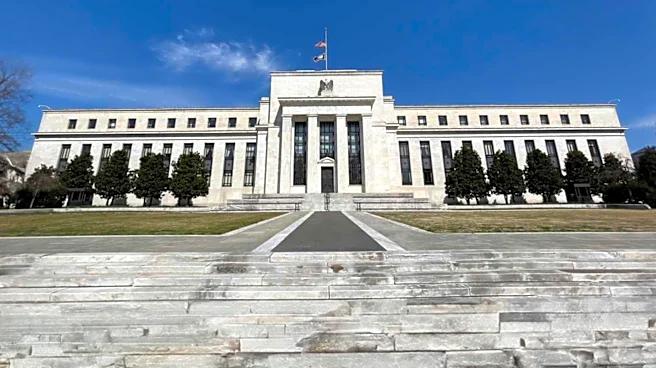
The Federal Reserve influences mortgage rates but does not directly set them, a common misconception among the public. Mortgage rates are affected by a broader range of factors, including inflation expectations, economic growth, employment data, and investor
demand for bonds. The Fed adjusts its benchmark federal funds rate to control inflation, which in turn influences short-term borrowing costs. However, the yield on the 10-year U.S. Treasury note is a more direct indicator for mortgage rates, as it moves with investor expectations about inflation and future interest rates. While the Fed held rates steady in late October, market expectations suggest a potential rate hike in December. The original report cited market expectations that the Federal Reserve could raise its benchmark rate again before the end of 2026, with inflation readings beginning to moderate.
Why It's Important?
Understanding the distinction between the Federal Reserve's influence and direct control over mortgage rates is crucial for consumers and the housing market. Misconceptions can lead to inaccurate predictions about future rates, impacting decisions for potential homebuyers and sellers. If inflation remains persistent, interest rates could stay elevated, making homeownership less affordable. Conversely, improvements in economic conditions and inflation could lead to a market response before the Fed officially cuts rates. This dynamic means that a Fed announcement is only one piece of the puzzle; economic reports, global events, and investor confidence also play significant roles. For the U.S. housing market, this complexity necessitates a focus on current affordability rather than speculative future rate changes.
What's Next?
Mortgage rate forecasts are subject to rapid change as new economic information becomes available. While market expectations point to a potential Federal Reserve rate hike in December, the actual movement of mortgage rates will depend on a confluence of factors. If inflation continues to cool and economic conditions improve, financial markets may react, potentially leading to a decline in mortgage rates even before an official Fed rate cut. For individuals considering buying or selling a home, it is advisable to focus on current affordability and financial planning rather than attempting to time the market based solely on Fed decisions. Lenders and real estate professionals can provide guidance on current loan options, credit profiles, and strategies like rate locks or seller concessions.
Beyond the Headlines
The indirect relationship between the Federal Reserve and mortgage rates highlights the intricate mechanisms of the U.S. financial system. This complexity often creates a disconnect between public perception and economic reality, leading to potential misjudgments in personal financial planning. The influence of global events and investor sentiment on Treasury yields further underscores how external factors can ripple through the domestic economy, affecting everyday aspects like housing affordability. This situation also emphasizes the importance of financial literacy for consumers, enabling them to make informed decisions in a dynamic economic environment. The ongoing debate about inflation and interest rates reflects broader societal concerns about economic stability and access to essential assets like housing.