




What's Happening?
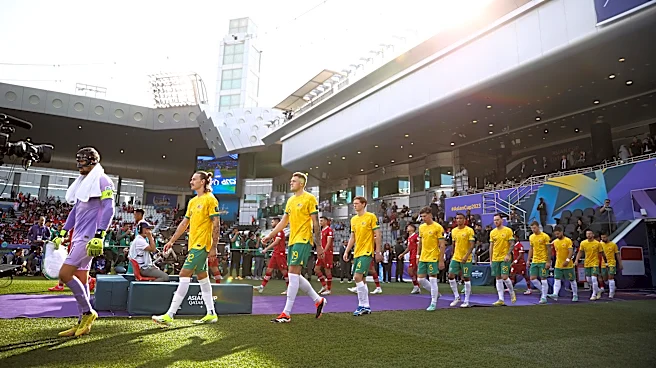
Australia's upcoming soccer friendly match against Jordan, originally scheduled to take place in Amman, Jordan, has been moved to Doha, Qatar. This decision was made due to escalating security concerns in the Jordanian capital. Football Australia confirmed
that the Jordan Football Association approved their request for the relocation. The Australian Department of Foreign Affairs and Trade had previously advised its citizens to reconsider travel to Jordan, citing an 'unpredictable security situation' and the 'threat of terrorism.' This move follows intelligence indicating that Iran has increased efforts to target American personnel in the region, leading the U.S. State Department to reduce staffing at several U.S. embassies in the Middle East, including Amman. The Australian team, known as the Socceroos, is already in Doha for another friendly match against Qatar, allowing them to remain in their current base for the rescheduled game against Jordan.
Why It's Important?
The relocation of this international soccer match underscores the heightened security anxieties prevalent in the Middle East, directly impacting international events and travel. For sports organizations, it highlights the critical need for flexibility and robust contingency planning in regions with geopolitical instability. The decision reflects a broader concern for the safety of athletes and staff, influencing future considerations for hosting international competitions. The U.S. State Department's reduction in embassy staffing in Amman further signals a perceived increase in risk, which could affect diplomatic relations, business operations, and the safety of U.S. citizens in the region. This situation could lead to more cautious approaches from other nations and organizations when planning activities in areas deemed to have elevated security threats, potentially impacting tourism and economic investment.
What's Next?
The Australian national soccer team will proceed with their friendly match against Jordan in Doha as planned, utilizing their existing logistical arrangements in Qatar. This will be their final training camp for four months, making these matches crucial for team preparation. The broader implications suggest that international sports federations and event organizers will likely continue to monitor security assessments closely for future events in the Middle East. Governments, including the U.S., will likely maintain or adjust their travel advisories and diplomatic presence based on evolving intelligence regarding regional threats. This incident may prompt a review of security protocols for international sporting events and other large gatherings in potentially volatile areas, leading to increased scrutiny and potentially more frequent relocations or cancellations if security concerns persist.
Beyond the Headlines
This event reflects a growing trend where geopolitical tensions directly impinge on non-political spheres like international sports. The decision to move the match, driven by security intelligence and governmental advisories, illustrates the interconnectedness of global security and daily life. It also highlights the challenges faced by countries in the region that rely on international events for tourism and economic stimulation, as security concerns can deter such activities. The perceived threat from Iran, as indicated by U.S. intelligence, suggests a complex and evolving security landscape in the Middle East, where various actors contribute to regional instability. This situation could lead to a re-evaluation of risk assessment models for international travel and events, potentially setting precedents for how countries and organizations respond to similar threats in the future, emphasizing safety over logistical convenience.