
What's Happening?
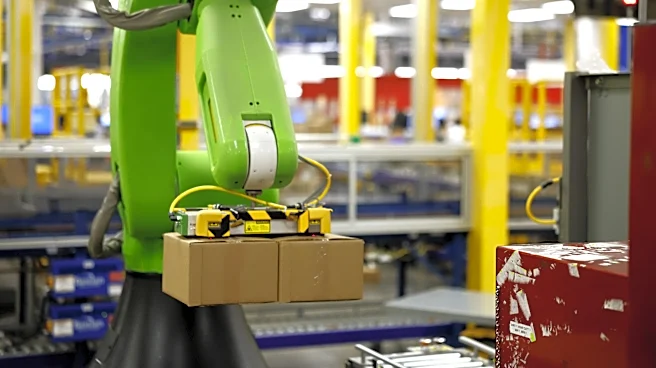
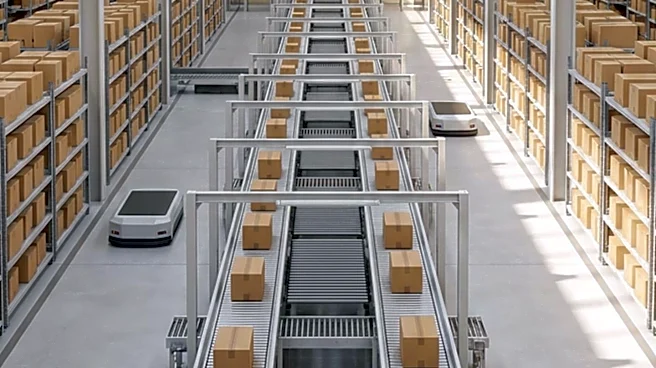
Mytra, a company specializing in warehouse automation, material handling systems, industrial robotics, and AI-powered logistics software, has successfully closed a Series C funding round, raising $120
million. This latest investment brings the company's total funding to $198 million since its founding in 2022. Headquartered in Brisbane, California, Mytra employs 195 individuals, with 149 of them based in Northern America. The company's product offerings include an automated material flow system, an automated storage system, warehouse automation software, and various material handling robots. This significant capital injection is expected to fuel further development and expansion of its advanced automation solutions.
Why It's Important?
This substantial funding round for Mytra underscores the growing demand and investment in warehouse automation and AI-powered logistics within the U.S. and global markets. The continued development and deployment of Mytra's technologies, such as automated material flow systems and industrial robotics, are crucial for enhancing supply chain efficiency and reducing operational costs for businesses across various sectors. For U.S. industries, particularly retail, manufacturing, and e-commerce, improved automation can lead to faster order fulfillment, reduced labor dependency, and increased productivity. This investment also highlights the competitive landscape in the logistics technology space, where companies are vying to offer the most advanced and integrated solutions to meet evolving market needs. The success of companies like Mytra can also stimulate job growth in high-tech manufacturing and software development within the U.S.
What's Next?
With the new $120 million in Series C funding, Mytra is poised to accelerate its research and development efforts, potentially introducing new features and capabilities to its existing suite of warehouse automation and robotics products. The company may also look to expand its market reach, both domestically and internationally, to capitalize on the increasing demand for automated logistics solutions. This could involve scaling up manufacturing, hiring more specialized talent, and forging strategic partnerships with other technology providers or logistics companies. The influx of capital will likely enable Mytra to strengthen its competitive position and continue innovating in the rapidly evolving field of industrial automation and AI-driven supply chain management.
Beyond the Headlines
The significant investment in Mytra reflects a broader trend towards the automation of labor-intensive tasks in the logistics and warehousing sectors. This shift has profound implications for the future of work, potentially leading to a re-skilling of the workforce and a greater emphasis on roles that manage and maintain advanced robotic systems. Ethically, the increased reliance on automation raises questions about job displacement and the need for robust social safety nets and educational programs to prepare workers for new economic realities. Legally, the deployment of more complex AI and robotics in warehouses may necessitate new regulations concerning safety, data privacy, and the liability of autonomous systems. Culturally, the integration of advanced automation could redefine efficiency standards and consumer expectations for speed and convenience in product delivery.