

What's Happening?
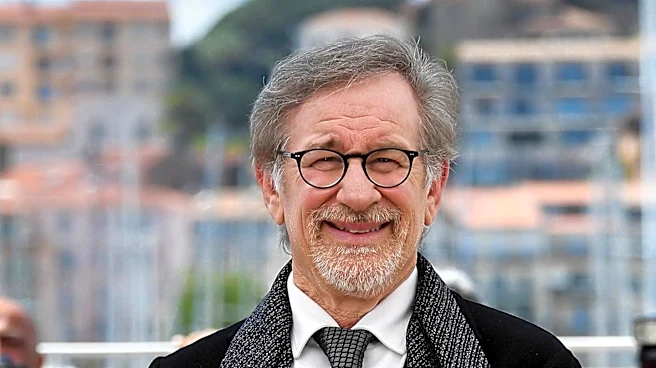
Renowned filmmaker Steven Spielberg has voiced his apprehension regarding the possibility of Universal Pictures remaking his iconic 1982 science fiction film, 'E.T. the Extra-Terrestrial,' without his creative input. Despite the film's monumental success,
holding the record for the highest-grossing film for 11 years, Spielberg revealed that he does not possess the rights to 'E.T.' This means Universal could, theoretically, proceed with a remake independently. Spielberg, who was in his mid-30s when 'E.T.' was released, acknowledged that at that point in his career, he 'didn’t have the clout' to retain those rights, unlike his control over other franchises like 'Indiana Jones' (with George Lucas) and projects post-'E.T.'. He expressed gratitude that Universal has, to date, shown respect by not pursuing such a project, but highlighted that they legally could if they chose to. The film was a critical and commercial triumph, earning $797 million on a budget of just over $10 million and receiving nine Oscar nominations.
Why It's Important?
This situation underscores the complex dynamics of intellectual property rights and creative control within the Hollywood film industry, particularly concerning beloved and culturally significant works. For filmmakers like Spielberg, who pour their vision into projects that become cinematic touchstones, the lack of ownership over their creations can be a significant concern. A remake of 'E.T.' without Spielberg's involvement could risk alienating a dedicated fanbase and potentially dilute the original's legacy, which is celebrated for its emotional depth, innovative puppetry, and careful handling of child actors. The commercial success of remakes and reboots often drives studios to revisit established franchises, but this case highlights the tension between commercial viability and artistic integrity. The potential for a studio to capitalize on a classic without its original creator's input raises questions about the value placed on a director's unique vision versus the perceived marketability of a known title.
What's Next?
While Spielberg has indicated that a remake of 'E.T.' is unlikely due to Universal's current respect for his original work, the legal possibility remains. The ongoing trend of remakes, reboots, and sequels in Hollywood suggests that studios are continuously evaluating their intellectual property for new commercial opportunities. Although Spielberg himself developed a treatment for a horror-focused 'E.T.' sequel shortly after the original's release, he wisely abandoned it. Actor Henry Thomas, who played Elliot, has also expressed disinterest in a sequel, acknowledging that the financial incentives for such projects are always present. The future of 'E.T.' as a franchise will likely depend on Universal's long-term strategic decisions regarding its catalog and whether the perceived financial gains of a remake outweigh the potential backlash from fans and the original creator.
Beyond the Headlines
The discussion around a potential 'E.T.' remake touches upon broader themes of nostalgia, artistic legacy, and the evolving nature of film consumption. In an era dominated by reboots and expanded cinematic universes, the sanctity of original works is often challenged. Spielberg's concern reflects a common sentiment among creators who wish to protect the integrity of their art from purely commercial exploitation. The original 'E.T.' was not just a box office hit; it was a cultural phenomenon that shaped childhoods and influenced subsequent generations of filmmakers. A remake, even if well-intentioned, risks altering the collective memory and emotional connection audiences have with the original. This scenario also highlights the power imbalance between individual creators and large studios, where even legendary directors may not have ultimate control over their most iconic works, prompting ongoing debates about creator rights and intellectual property in the entertainment industry.