
What's Happening?
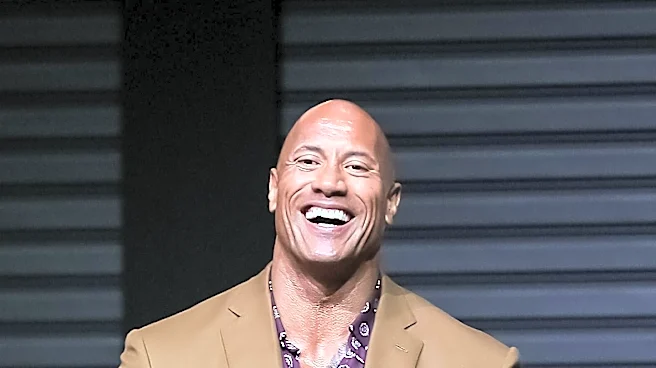
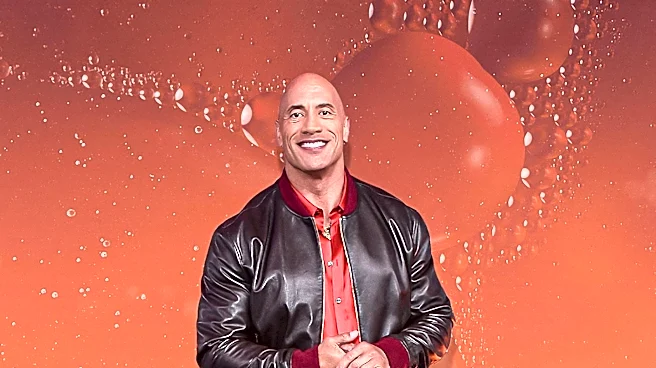
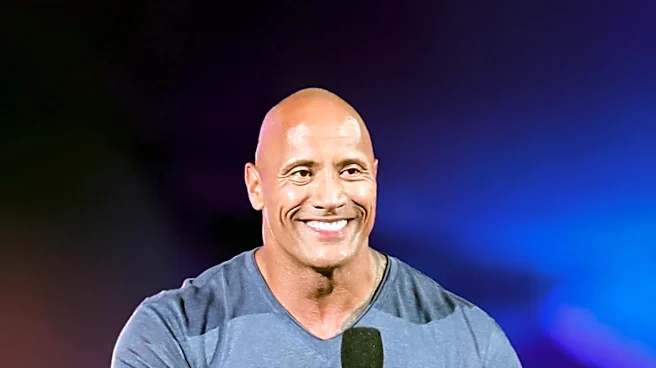
Dwayne Johnson's career is characterized by a strategic balance between his charismatic 'swagger' and a relatable 'scar' or vulnerability, which audiences consistently pay to see. While his 2025 film 'The
Smashing Machine,' where he played a quiet, scared fighter, received critical acclaim for his performance, it had the weakest box office opening of his career. This outcome suggests that audiences expect both elements—bravado and underlying vulnerability—from Johnson. His success began as 'The Rock,' a wrestling character, which transitioned into film roles like 'The Scorpion King' (2002) and 'Walking Tall' (2004), where he played strong men with grievances. His role as Agent Luke Hobbs in 'Fast Five' (2011) revitalized the franchise and led to the successful spin-off 'Hobbs & Shaw' (2019) with Jason Statham, which grossed over $750 million worldwide. However, attempts to remove the 'bruise' or vulnerability, as seen in 'G.I. Joe: Retaliation' (2013) and 'Baywatch' (2017), or to focus solely on rage without swagger, as in 'Black Adam' (2022), resulted in less enthusiastic audience reception or financial disappointment. His streaming success with 'Red Notice' (2021) on Netflix did not translate to theatrical success for 'Red One' (2024). Johnson is now returning to family-friendly franchises like 'Moana 2' (2024) and 'Jumanji: Open World,' which allow for the full expression of his 'swagger with a scar' formula.
Why It's Important?
Dwayne Johnson's career trajectory highlights a critical aspect of celebrity branding and audience expectation in the entertainment industry. His success demonstrates that for certain stars, a consistent and recognizable persona, rather than pure acting versatility, can be the primary driver of box office appeal. The 'swagger with a scar' formula he employs resonates deeply with audiences, indicating a preference for heroes who are powerful yet relatable through their vulnerabilities. This has significant implications for film studios and producers, suggesting that deviating too far from a star's established brand can lead to financial underperformance, even with critical acclaim. It also underscores the difference between streaming success, where content is consumed at home, and theatrical success, which demands a compelling reason for audiences to pay for a ticket. Johnson's return to family franchises like 'Moana' and 'Jumanji' reflects a strategic move to leverage his proven appeal in contexts that allow his full persona to shine, ensuring continued commercial viability.
What's Next?
Dwayne Johnson is focusing on established family-friendly franchises, with 'Moana 2' released in 2024 and the live-action 'Moana' in July 2026. 'Jumanji: Open World' is also scheduled for December. This shift indicates a strategic move to roles where his 'swagger with a scar' formula is fully embraced and has historically proven successful. These projects are expected to reinforce his commercial appeal and provide a 'safe harbor' for his career, following mixed results from other ventures. The performance of these films will likely dictate his future project selections, emphasizing the importance of aligning with audience expectations for his unique brand of heroism.
Beyond the Headlines
The analysis of Dwayne Johnson's career offers a deeper insight into the psychology of audience engagement with celebrity personas. It suggests that audiences often form a strong, almost personal, connection with a star's perceived identity, and any significant departure from this can be met with resistance. This phenomenon extends beyond mere acting ability, touching upon the emotional contract between a performer and their fans. It also raises questions about the pressures on actors to maintain a consistent brand versus exploring diverse roles, and how this balance impacts both artistic fulfillment and commercial success. Johnson's experience with 'The Smashing Machine' underscores the challenge of artistic ambition when it conflicts with a deeply ingrained public image, revealing the complex interplay between art, commerce, and audience expectations in Hollywood.