






What's Happening?
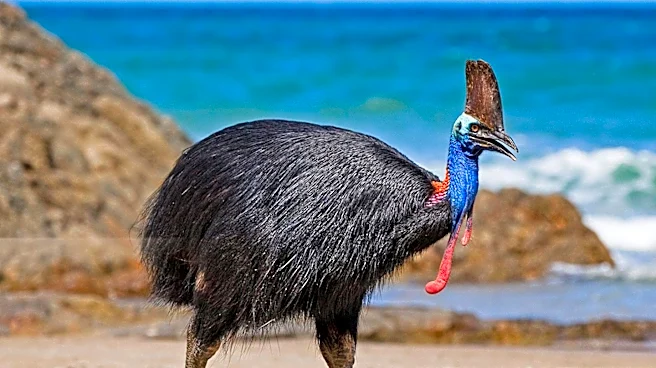
Cassowaries, large flightless birds native to Australia, are drawing attention for their striking resemblance to theropod dinosaurs, such as T. rex and velociraptors. These birds, which can stand nearly six feet tall and weigh up to 167 pounds, possess
powerful legs, three-toed feet, and dagger-like claws. Despite their intimidating appearance, cassowaries are frugivores, primarily consuming fruit. They also have a distinctive casque on their heads, similar to features believed to have been present in many dinosaurs. The San Diego Zoo notes that cassowaries are among the largest birds on Earth, with males weighing up to 121 pounds and females even larger. Their deep, rumbling calls, known as 'booms,' are the lowest-pitched bird calls in the world, capable of traveling long distances through dense rainforest.
Why It's Important?
The cassowary's resemblance to dinosaurs provides a living link to the prehistoric past, offering insights into the evolutionary lineage of birds from theropod dinosaurs. This connection highlights the continuity of life and evolution over millions of years, emphasizing the importance of preserving biodiversity. Understanding the cassowary's biology and behavior can also contribute to conservation efforts, as these birds are considered vulnerable due to habitat loss and other environmental pressures. Their unique characteristics and evolutionary history make them a subject of interest for both scientists and the general public, fostering a greater appreciation for the natural world and its ancient roots.