








What's Happening?
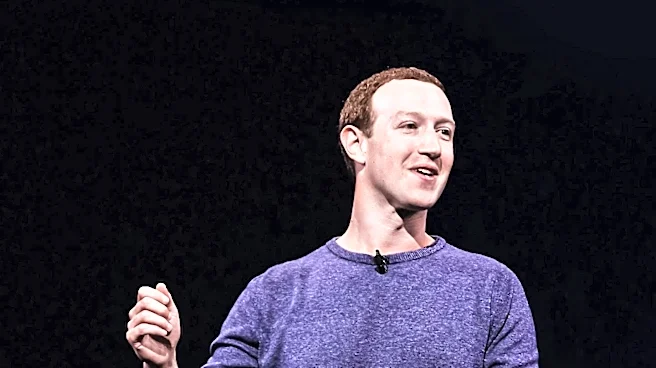
Meta CEO Mark Zuckerberg recently addressed employees at an internal town hall meeting, acknowledging that the development of AI agents has not progressed as quickly as anticipated. Earlier this year, Meta laid off approximately 8,000 employees, about
10% of its corporate workforce, and reassigned another 7,000 to various AI-focused groups, including one called Agent Transformation. These moves were part of a broader strategy to adapt to the rapidly changing tech landscape. However, Zuckerberg noted that the expected benefits of this AI-centric restructuring have not yet materialized. Despite the setbacks, he expressed optimism that improvements from AI investments would become evident in the next three to six months. Meta has committed significant resources to AI, with an expected expenditure of up to $145 billion on AI infrastructure this year.
Why It's Important?
The slow progress in AI development at Meta highlights the challenges tech companies face in integrating advanced technologies into their operations. This situation underscores the complexity of AI implementation and the potential disconnect between investment and immediate results. For Meta, the delay could impact its competitive edge in the tech industry, where rapid innovation is crucial. The layoffs and restructuring also reflect broader trends in the tech sector, where companies are reevaluating their workforce and strategic priorities in response to market pressures. The outcome of Meta's AI initiatives could influence investor confidence and set a precedent for other tech firms navigating similar challenges.
What's Next?
Meta's leadership anticipates that the benefits of its AI investments will become apparent within the next three to six months. During this period, the company will likely focus on optimizing its AI strategies and addressing any operational inefficiencies. Stakeholders, including investors and employees, will be closely monitoring the situation to assess the effectiveness of Meta's AI initiatives. The company's ability to deliver on its AI promises could significantly impact its market position and influence future strategic decisions. Additionally, the tech industry will be watching Meta's progress as a case study in large-scale AI integration.