






What's Happening?
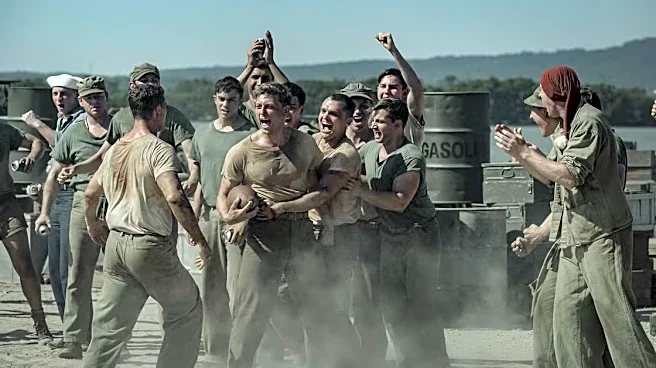
Director Peter Berg's latest film, 'The Mosquito Bowl,' adapted from Buzz Bissinger's book, explores the intersection of American football and World War II. The movie focuses on a touch football game played by American soldiers before the Battle of Okinawa,
blending themes of masculine competition from both sports and warfare. The narrative opens by stitching together two college football games, featuring characters like Dave Schreiner (Tom Francis) and Tony Butkovich (Ray Nicholson), establishing a rivalry that transitions into their military service. The film depicts their enlistment in the Marines after the attack on Pearl Harbor, with their training at Parris Island receiving a conventional edit. While the film aims to connect the football field to the battlefield, critics note that it often prioritizes rapid chronology over deep characterization, particularly in the soldiers' emotional processing of wartime experiences. The casting, however, is highlighted as a strong point, with performances from Ray Nicholson and Tom Francis receiving praise.
Why It's Important?
The film's exploration of the transition from athletic competition to military conflict offers a commentary on American masculinity and patriotism during a pivotal historical period. By linking the 'gridiron glory' of football with the 'WWII carnage,' Berg attempts to draw parallels between these two intense arenas of human endeavor. The critical reception, which suggests the film is a better football movie than a combat one, highlights the challenge of balancing these themes effectively. The movie's attempt at a non-partisan condemnation of war, framed around protecting young men from overseas battles, resonates with contemporary discussions about military involvement. However, its perceived lack of deep political engagement or character development beyond their athletic roots may limit its impact as a profound anti-war statement, making it more of a visceral drama about physical and emotional endurance.
What's Next?
'The Mosquito Bowl' is currently playing in select theaters and is scheduled to stream on Netflix starting Wednesday, November 25. Its release on a major streaming platform will make it accessible to a wider audience, potentially sparking further discussion about its themes of war, sport, and American identity. The film's critical reception, which notes its technical mastery in depicting combat sequences but also its narrative shortcomings, may influence future projects by Peter Berg and other filmmakers tackling similar historical and thematic material. The performances of emerging actors like Ray Nicholson and Tom Francis could also gain further recognition as the film reaches a broader viewership.
Beyond the Headlines
The film's portrayal of soldiers' inability to articulate their emotions or understand 'nuance' points to a deeper cultural aspect of masculinity, particularly in contexts of war and competitive sports. This suggests a societal expectation for stoicism and physical prowess over emotional expression, which can have long-term psychological implications for individuals. The film's incidental resonance with contemporary fears of 'forever wars' also touches upon the cyclical nature of conflict and the enduring questions surrounding military intervention. By focusing on the bonding through touchdowns and trauma, 'The Mosquito Bowl' inadvertently highlights how shared intense experiences, whether on a sports field or a battlefield, can forge powerful but complex human connections, often at the expense of individual emotional depth and understanding.