







What's Happening?
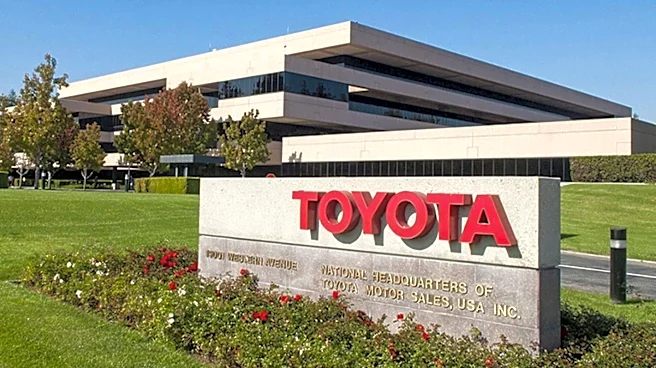
Toyota Motor North America has inaugurated a new 30,000-square-foot battery center in Saline, Michigan. This facility, known as the Toyota Battery Center of North America (TBC), is a crucial step in the company's 'electrification transformation.' The
center will serve as a central hub for the development and evaluation of battery technologies for various vehicle types, including hybrid, plug-in hybrid, hydrogen, and fully electric vehicles. Engineers and technicians at the TBC will assess battery performance and develop new technologies, working in partnership with Toyota's North American manufacturing network. This initiative aims to support battery evaluation for Toyota Battery Manufacturing North Carolina and other vehicle manufacturing plants across North America. According to Keita Moritsu, Toyota Motor North America R&D senior vice president and chief technology officer, this center expands Toyota's leadership in battery development to North America. Jordan Choby, Group Vice President of Powertrain, stated that the facility will enable Toyota engineers to address field concerns more rapidly and develop longer-lasting batteries suited for American driving conditions. Toyota also plans to share research access with the University of Michigan Electric Vehicle Center, fostering the next generation of battery engineers.
Why It's Important?
The establishment of the Toyota Battery Center of North America is a significant development for the U.S. automotive industry and the broader push towards electrification. By localizing battery research and development in Michigan, Toyota is strengthening its North American manufacturing capabilities and supply chain for electric vehicles. This move is expected to accelerate the innovation cycle for battery technology, leading to more efficient, durable, and cost-effective batteries for consumers. The center's focus on evaluating batteries for various electrified powertrains, from hybrids to fully electric vehicles, underscores Toyota's comprehensive approach to electrification, catering to diverse market demands. Furthermore, the collaboration with the University of Michigan Electric Vehicle Center highlights a commitment to workforce development and talent cultivation within the U.S., ensuring a pipeline of skilled engineers and technicians for the evolving automotive landscape. This investment also reinforces the U.S.'s position as a hub for advanced automotive technology and manufacturing, potentially attracting further investments and job creation in the sector. The ability to detect and resolve battery-related field concerns faster and closer to the source will enhance customer satisfaction and the overall reliability of Toyota's electrified vehicles in the North American market.
What's Next?
Following the opening of the Toyota Battery Center of North America, the facility will immediately begin its work on battery evaluation and technology development. The center will play a critical role in supporting Toyota Battery Manufacturing North Carolina, which commenced production in 2025, producing lithium-ion batteries for hybrid electric, plug-in hybrid electric, and battery electric vehicles. The ongoing collaboration with the University of Michigan Electric Vehicle Center is expected to yield advancements in battery technology and foster a skilled workforce. Toyota's continued investment in North American battery development suggests a strategic focus on increasing local content and reducing reliance on overseas supply chains for its electrified vehicle components. Future developments may include the integration of new battery chemistries and manufacturing processes developed at the Saline center into Toyota's production lines. The success of this center could also influence other automotive manufacturers to further localize their battery R&D and production efforts in the U.S., intensifying competition and innovation in the electric vehicle market.
Beyond the Headlines
The opening of the Toyota Battery Center of North America signifies a deeper shift in the automotive industry's global strategy, moving beyond mere assembly to encompass critical component research and development within key markets. This localization of advanced battery technology R&D has profound implications for national economic resilience and technological sovereignty. By investing in domestic battery innovation, Toyota is not only securing its future in the electrified vehicle market but also contributing to the U.S.'s strategic independence in a critical technology sector. This move could mitigate risks associated with geopolitical tensions and supply chain disruptions, which have historically impacted the automotive industry. Moreover, the emphasis on developing batteries specifically designed for 'conditions American drivers face every day' suggests a tailored approach to product development that could lead to more robust and reliable electric vehicles, addressing consumer concerns about performance and longevity. The partnership with academic institutions also underscores a broader trend of industry-academia collaboration, essential for driving innovation and preparing the next generation for high-tech manufacturing and engineering roles, thereby strengthening the U.S. innovation ecosystem.