


What's Happening?
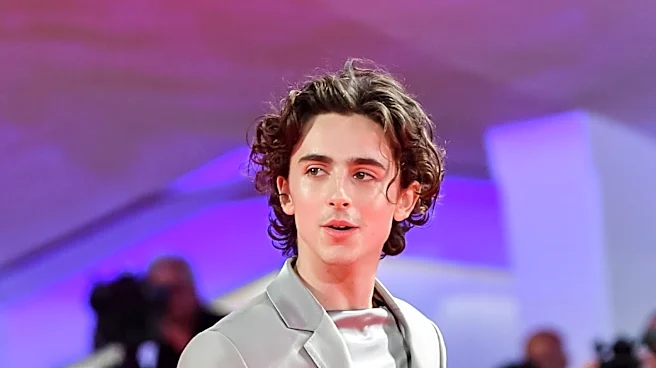
Timothée Chalamet has indicated his reservations about reprising his role as Elio in a potential sequel to the critically acclaimed film 'Call Me by Your Name.' In a recent interview with Vanity Fair, Chalamet stated his preference to leave the original
film untouched, suggesting that some stories are best left as they are. However, he expressed strong enthusiasm for working again with the film's director, Luca Guadagnino, stating he would do so 'in a heartbeat.' This sentiment comes nearly nine years after the initial release of the romantic drama, which garnered significant praise and earned Chalamet his first Academy Award nomination for Best Actor. The film was an adaptation of André Aciman's 2007 novel. Aciman later published a sequel novel, 'Find Me,' in 2019, which continues the stories of Elio, Oliver, and Elio's father. Despite the existence of a literary sequel, a film adaptation has not been confirmed, and Chalamet's recent comments suggest a reluctance to return to the character of Elio, while keeping the door open for future collaborations with Guadagnino.
Why It's Important?
Chalamet's stance on a 'Call Me by Your Name' sequel is significant for several reasons within the entertainment industry. Firstly, it highlights the growing trend among actors to carefully consider the impact of revisiting beloved roles, especially those that have achieved iconic status. His desire to preserve the original film's integrity reflects a broader artistic concern about potential dilution of a successful narrative. Secondly, his strong desire to work with Luca Guadagnino again underscores the value of director-actor relationships in Hollywood. Such collaborations often lead to critically acclaimed projects and can influence future casting decisions and film development. For fans of the original film, Chalamet's comments manage expectations regarding a direct sequel while offering hope for new projects involving the successful creative duo. This also impacts potential investors and studios, as the absence of a key star can significantly alter the commercial viability of a sequel, even if the source material exists.
What's Next?
While a direct sequel to 'Call Me by Your Name' featuring Timothée Chalamet as Elio appears unlikely based on his current statements, the possibility of future collaborations between Chalamet and director Luca Guadagnino remains open. This could manifest in entirely new projects, potentially in different genres or with new characters, allowing both artists to explore new creative avenues. Studios and producers interested in leveraging the successful partnership between Chalamet and Guadagnino may now focus on developing original screenplays or adapting other literary works that could bring them together. For fans, this means shifting expectations from a direct continuation of Elio's story to anticipating a new film that reunites the acclaimed actor and director. The decision also leaves the door open for other actors to potentially take on roles in a 'Find Me' adaptation, though without Chalamet, its appeal might be significantly altered.
Beyond the Headlines
Chalamet's decision to potentially forgo a sequel to 'Call Me by Your Name' touches upon deeper themes within the film industry regarding artistic legacy and the commercial pressures of franchise building. In an era where sequels, reboots, and cinematic universes dominate, an actor's choice to protect the integrity of a standalone work can be seen as a powerful artistic statement. It raises questions about whether every successful film needs a continuation, or if some stories are best left as complete narratives. This stance also reflects a broader cultural conversation about nostalgia versus innovation in storytelling. Furthermore, the emphasis on his willingness to work with Guadagnino again, rather than on the specific character, highlights the importance of creative partnerships over character continuity for some artists. This could influence how actors approach long-term commitments to franchises, potentially leading to more selective engagement with sequels and a greater focus on diverse roles and collaborations.