








What's Happening?
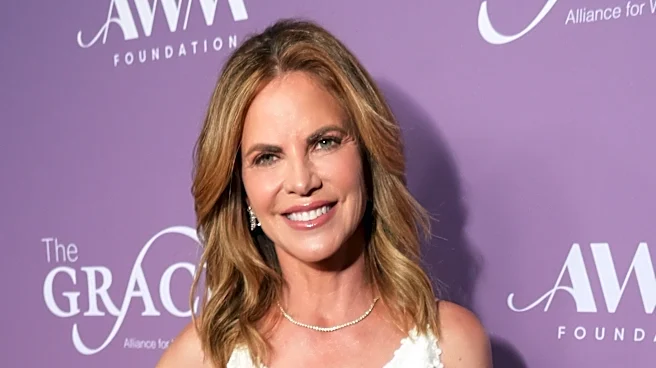
Naomi Watts has openly discussed her experiences with menopause, including an early stage at age 36, and how it impacted her relationship with her now-husband, Billy Crudup. She recounted a moment early in their relationship when she was wearing a hormone
patch and felt embarrassed, attempting to remove it discreetly. Crudup's reassuring response, expressing gladness that she was seeking help, transformed a moment of potential anxiety into one of intimacy. Watts emphasizes the importance of open communication about menopause and challenges the societal notion that sex life ends after a certain age. Her personal journey has also led her to advocate for better understanding and support for women experiencing menopause, including through her book, 'Dare I Say It: Everything I Wish I’d Known About Menopause,' and her company, Stripes Beauty.
Why It's Important?
This discussion is important as it contributes to destigmatizing menopause and promotes open conversations about women's health, particularly sexual health, which is often overlooked or considered taboo. Naomi Watts's public sharing of her personal experience, including her initial embarrassment and her partner's supportive reaction, can empower other women to address their own menopausal symptoms and communicate more openly with their partners and healthcare providers. By highlighting the physical and emotional challenges of menopause, and the potential for continued intimacy and well-being, Watts's advocacy helps to shift societal perceptions and encourages a more proactive approach to menopausal care. Her efforts through her company and book aim to provide resources and foster a community where women feel less alone in their experiences.
What's Next?
Naomi Watts is expected to continue her advocacy for menopause awareness through her platform, Stripes Beauty, and potentially through further publications or public appearances. The ongoing conversation around menopause, fueled by public figures like Watts, is likely to encourage more women to seek information and support, leading to increased demand for menopausal health resources and products. Healthcare providers may also see a rise in patients seeking comprehensive care for menopausal symptoms, prompting a greater focus on this area of women's health. The broader impact could include a continued shift in cultural attitudes, making discussions about menopause more commonplace and less stigmatized in society and within relationships.
Beyond the Headlines
The candid discussion about menopause, particularly its impact on intimacy and relationships, delves into deeper societal and cultural implications. For generations, menopause has been a topic often discussed in hushed tones, leading to feelings of isolation and shame for many women. Watts's story challenges this silence, suggesting that vulnerability and honesty can strengthen relationships rather than weaken them. It also highlights the evolving role of celebrities in public health advocacy, using their platforms to normalize experiences that were once considered private. This movement could lead to a more inclusive understanding of aging and sexuality, fostering an environment where women's health concerns are openly acknowledged and supported, moving beyond the traditional focus on reproductive years to encompass the full spectrum of women's lives.