







What's Happening?
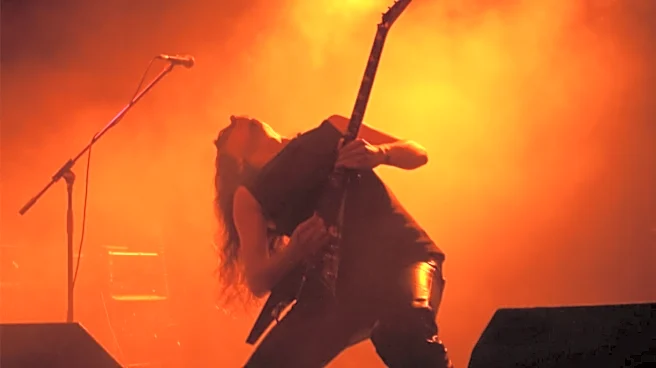
Brazil's metal underground is experiencing a vibrant period, marked by a new wave of artists who are pushing the genre into new forms of sonic excess. Over the past decade, these agitators have released a striking collection of genre-defying works that
reconfigure the sound of metal, drawing on its traditional vocabulary while expanding its broader lexicon. This movement spans a wide spectrum, from folk-inflected experimentation to black, death, and progressive metal. Artists are treating genre lines not as boundaries but as points of departure, leading to a scene that is unusually open and resilient, built on a continuous process of testing and reshaping musical forms. This tradition of innovation has deep roots in Brazil, with pioneering acts like Sarcófago in the 1980s and Sepultura, who evolved from death metal to global crossover success, demonstrating a long-standing tendency to push musical boundaries.
Why It's Important?
The flourishing of Brazil's metal underground is important for the global music industry, including the U.S., as it contributes to the diversification and evolution of a genre with a significant international following. The innovative approaches of Brazilian artists, who blend traditional metal with folk, rock, hip-hop, and regional influences, can inspire and influence musicians and producers in the U.S. and beyond. This creative ferment can lead to new subgenres, sounds, and artistic collaborations that enrich the broader musical landscape. For U.S. record labels, streaming platforms, and music festivals, this vibrant scene presents opportunities for discovering new talent, expanding their catalogs, and attracting diverse audiences. The continuous redefinition of metal by Brazilian artists also challenges conventional notions of genre, fostering a more inclusive and experimental environment within the music world, which can resonate with U.S. artists and fans seeking fresh sounds.
What's Next?
The Brazilian metal scene is expected to continue its trajectory of innovation and expansion. As new generations of musicians absorb diverse influences, the contours of Brazilian heavy music will likely broaden further. This ongoing evolution suggests that the genre will continue to produce unexpected detours and mutations, maintaining its elusive, exploratory, and resistant-to-domestication character. For fans and industry professionals, this means a continuous stream of new releases that challenge expectations and expand the possibilities of metal. International exposure for these artists, through tours, collaborations, and digital platforms, will be crucial in bringing their unique sounds to a wider global audience, including the U.S. The scene's resilience, built on instability and constant reinvention, indicates that it will remain a fertile ground for groundbreaking musical developments.
Beyond the Headlines
Beyond its musical impact, the thriving Brazilian metal underground reflects deeper cultural and artistic dynamics. The scene's ability to continually test and reshape boundaries, drawing on diverse influences, can be seen as a metaphor for cultural resilience and adaptation in a rapidly changing world. The integration of regional traditions and sounds into a globally recognized genre like metal highlights the power of cultural exchange and the breaking down of artistic silos. This phenomenon also speaks to the role of underground music scenes as incubators for innovation, often operating outside mainstream commercial pressures. The long-standing tradition of Brazilian artists treating genre lines as points of departure rather than boundaries suggests a cultural inclination towards experimentation and a rejection of rigid categorization, which can offer valuable lessons for creative industries worldwide, including in the U.S., on fostering artistic freedom and originality.