

What's Happening?
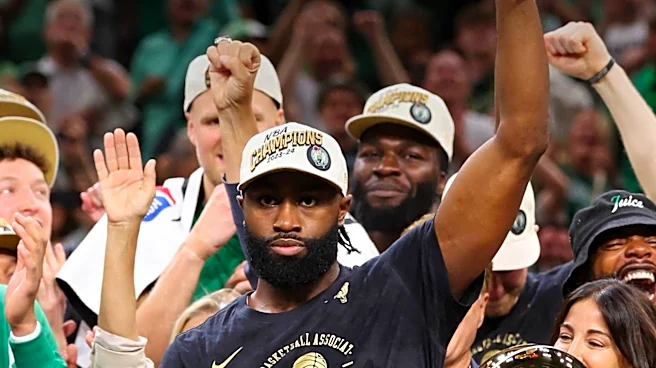
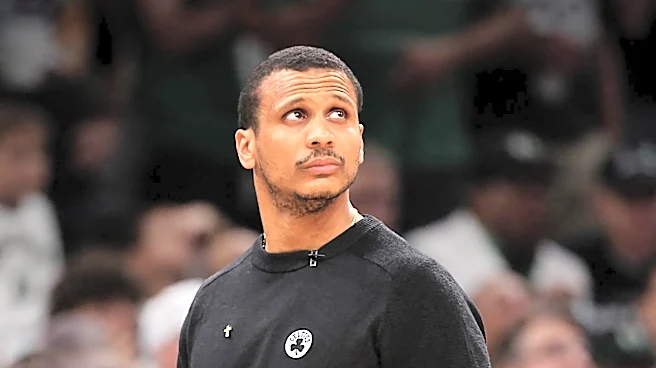
Joe Mazzulla, head coach of the Boston Celtics, who led the team to the 2024 NBA championship, has publicly stated his refusal to refer to himself as a 'championship head coach.' During an appearance on the 'No Show Dogs' podcast, Mazzulla explained that
he views the victory as a collective effort involving many individuals, rather than solely his personal accomplishment. He emphasized that his identity should not be solely defined by this title, suggesting that such an attachment could lead to feeling like a 'failure' if future successes are not replicated. Mazzulla also expressed his disdain for the Coach of the Year award, calling it a 'stupid award' that detracts from the players' contributions and the staff's hard work. He believes the focus should remain on the team and the competitive drive to achieve more, rather than individual accolades.
Why It's Important?
Mazzulla's stance on leadership and individual recognition is significant within the highly competitive and often ego-driven world of professional sports. His philosophy promotes a culture of humility and collective responsibility, which can foster stronger team cohesion and sustained motivation. By downplaying his personal role in the championship, he redirects credit to the entire organization, potentially empowering players and staff and reinforcing a shared sense of purpose. This approach could influence how other sports organizations view leadership and success, shifting focus from individual glory to collaborative achievement. Furthermore, his dismissal of the Coach of the Year award challenges the traditional metrics of coaching success, advocating for a more holistic evaluation that prioritizes team performance over individual honors. This perspective could resonate with athletes and coaches who feel that individual awards often overshadow the collaborative nature of team sports.
What's Next?
Mazzulla's continued leadership with the Boston Celtics will likely see him maintain his team-first philosophy, which could further solidify the team's internal dynamics and competitive spirit. His public statements may encourage a broader conversation within the NBA and other professional sports leagues about the nature of leadership, success, and individual versus collective recognition. Other coaches and sports executives might draw inspiration from his approach, potentially leading to a re-evaluation of how coaching achievements are celebrated and perceived. The Celtics, under Mazzulla's guidance, will continue to focus on future successes, driven by a collective desire for more championships rather than individual accolades. His unique perspective could also influence how media and fans discuss coaching performance, shifting the narrative towards team contributions.
Beyond the Headlines
Mazzulla's perspective extends beyond typical sports narratives, touching on deeper themes of identity, humility, and the true meaning of success. In a society that often glorifies individual achievement, his refusal to claim the 'championship coach' title offers a refreshing counter-narrative. This stance can serve as a powerful lesson in leadership, emphasizing that genuine success is often a product of collective effort and that personal identity should not be solely tied to external accomplishments. His views on awards also highlight a critique of how success is measured and celebrated, suggesting that some traditional accolades may be superficial or even counterproductive to long-term goals. This philosophical approach could inspire individuals in various fields to reconsider their own definitions of success and the importance of collaborative work over individual recognition.