




What's Happening?
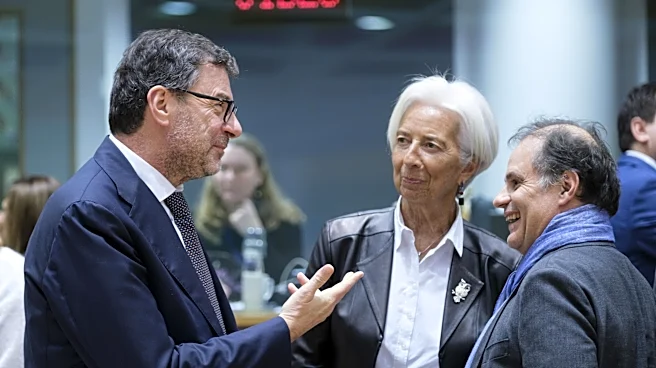
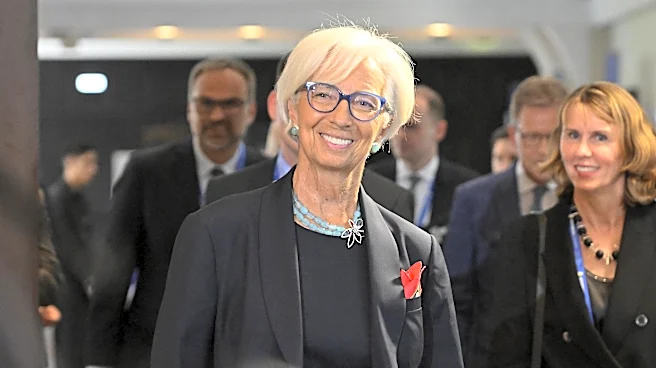
Christine Lagarde announced on October 29, 2026, her intention to step down as President of the European Central Bank (ECB) on February 7, 2027. This departure will occur nearly nine months ahead of her originally scheduled term end in October 2027. Following
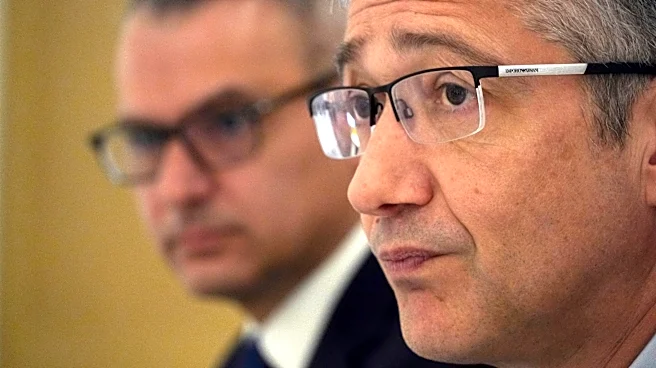
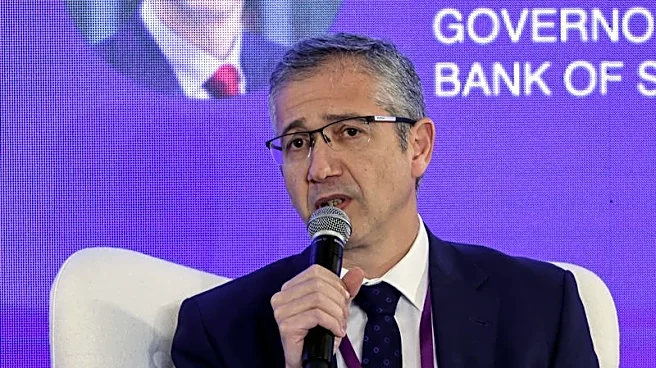
her announcement, Euro-area leaders reached a political agreement on November 26, 2026, to nominate Spain’s Pablo Hernández de Cos as her successor. If confirmed, Hernández de Cos would become the first Spaniard to lead the ECB since its establishment in 1998. The early handover signifies a significant leadership transition for the central bank, impacting its future direction and policy-making. The decision by Lagarde to leave her post earlier than anticipated has prompted a swift response from Euro-area leaders to ensure a smooth transition in leadership.
Why It's Important?
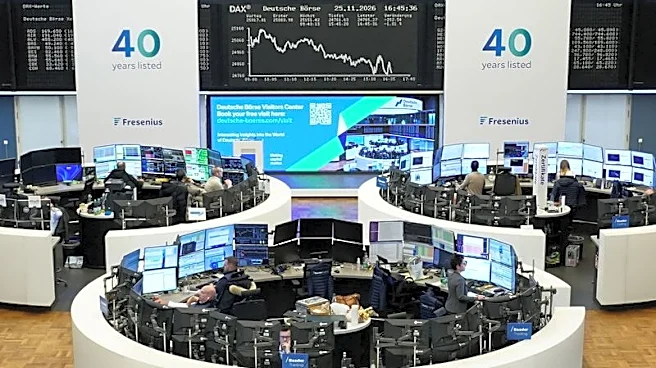
The early departure of Christine Lagarde from the European Central Bank presidency and the nomination of Pablo Hernández de Cos as her successor carry significant implications for the Eurozone and global financial markets. The ECB plays a crucial role in maintaining price stability and managing monetary policy for the 19 countries that use the euro. A change in leadership can introduce uncertainty or signal a shift in policy direction, potentially affecting bond yields, currency valuations, and investor confidence across the Eurozone. For the U.S., developments in the Eurozone, particularly concerning the stability of the euro and the economic health of its member states, can influence trade relations, investment flows, and the overall global economic outlook. A stable and predictable ECB leadership is generally viewed as beneficial for global financial stability, which indirectly supports U.S. economic interests by fostering a more predictable international trade and investment environment. The new president's approach to inflation, interest rates, and economic stimulus will be closely watched by international financial institutions and policymakers.
What's Next?
The political agreement among Euro-area leaders to appoint Pablo Hernández de Cos as the next President of the European Central Bank will now move through formal confirmation processes. This typically involves consultations with the European Parliament and the ECB Governing Council before a final decision is made by the European Council. The handover is scheduled for February 7, 2027, which means the transition period will be closely monitored for any indications of policy shifts or changes in the ECB's strategic direction. Financial markets and economic analysts will be scrutinizing Hernández de Cos's statements and initial actions for clues regarding future monetary policy, particularly concerning inflation targets, interest rate adjustments, and quantitative easing programs. His appointment could also influence the composition of the ECB's executive board, potentially leading to further changes in key positions. The focus will be on ensuring continuity and stability in the Eurozone's monetary policy during this leadership change.
Beyond the Headlines
The departure of Christine Lagarde and the nomination of Pablo Hernández de Cos highlight broader themes within European governance and central banking. Lagarde's tenure was marked by significant challenges, including navigating the economic fallout from global events and managing inflationary pressures. Her early exit could be interpreted in various ways, from personal reasons to strategic timing for a leadership change. The selection of Hernández de Cos, a Spaniard, also underscores the evolving geopolitical dynamics within the Eurozone and the distribution of influence among member states in key European institutions. This transition could also reignite discussions about gender diversity within the ECB's leadership, especially given that the source mentions the potential for only one woman, Laurance Boone, to remain among the 27 members of the council after other departures. The long-term implications for the ECB's independence and its role in shaping the future of the European economy will be a critical area of observation.