




What's Happening?
Uber Technologies (UBER) is currently trading at a forward price-to-earnings ratio of 16.4, representing a 30% discount from its all-time high stock price, despite robust financial performance. The company reported 215 million monthly active users, an 18%
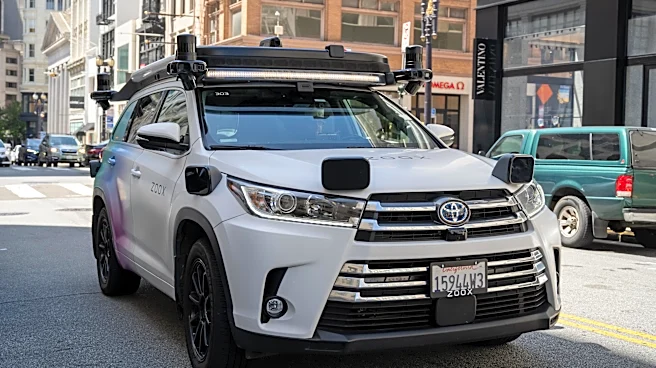
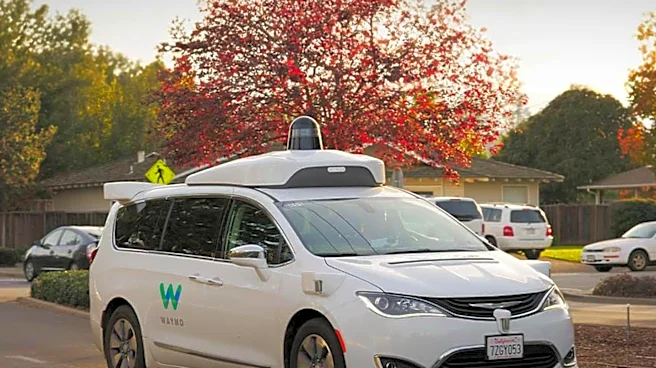
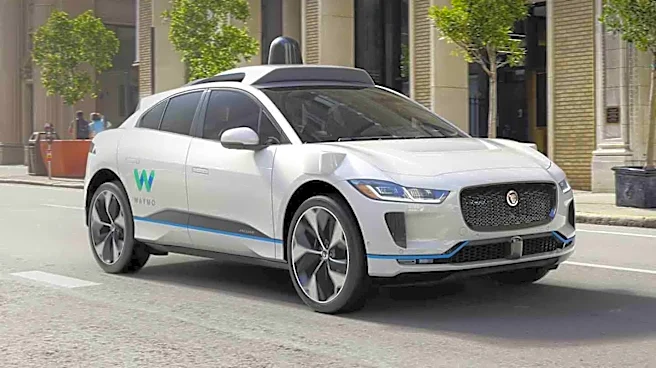
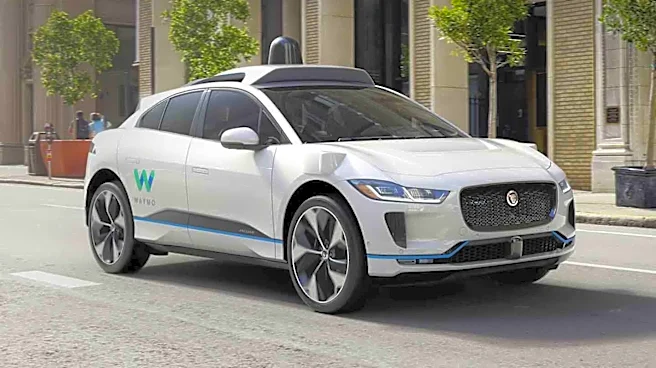
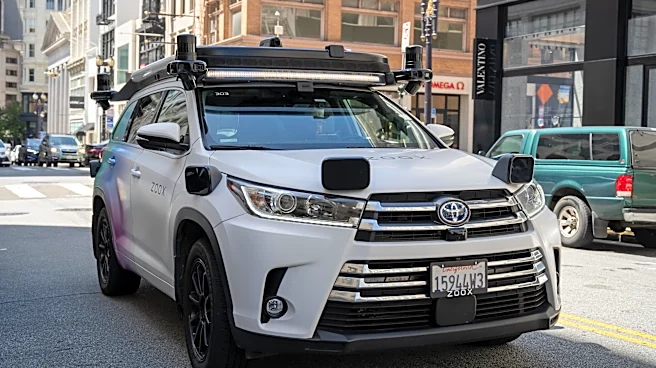
year-over-year increase in mobility gross bookings to $29.5 billion, and operating income exceeding $1.4 billion, up 30%. This valuation reflects market apprehension regarding the long-term threat posed by autonomous vehicle (AV) technology from competitors like Waymo and Tesla. While Uber has built a strong network effect by connecting riders and drivers globally, the potential for self-driving platforms to directly compete with its ride-hailing services is impacting investor sentiment. Uber aims to leverage its position as a commercialization layer for AVs, actively partnering with AV companies and planning to integrate more driverless vehicles onto its platform, targeting over 2,000 by the end of 2027.
Why It's Important?
The market's cautious stance on Uber highlights a significant disruption in the transportation industry, where established ride-hailing giants face existential threats from emerging autonomous technologies. For investors, Uber's current valuation presents a dilemma: whether the discount adequately prices in the risk of AV competition or if it undervalues Uber's strategic efforts to integrate AVs into its ecosystem. The success of companies like Waymo and Tesla in expanding their robotaxi services could fundamentally alter the competitive landscape, potentially eroding Uber's market share and profitability. Conversely, if Uber successfully positions itself as the preferred platform for AV commercialization, it could mitigate these threats and maintain its dominance. The outcome will significantly impact the future of urban mobility, influencing investment strategies in both ride-hailing and autonomous driving sectors.
What's Next?
Uber plans to continue its strategy of partnering with autonomous vehicle companies and integrating driverless cars into its network, aiming for approximately 700 fully driverless vehicles on its platform by year-end and over 2,000 by the end of 2027. This gradual integration suggests a hybrid model where human drivers will still play a crucial role, particularly in managing demand fluctuations. Investors will closely monitor the expansion and adoption rates of Waymo and Tesla's robotaxi services, as their progress will directly influence market sentiment towards Uber. Regulatory developments surrounding autonomous vehicles will also be critical, as a patchy regulatory environment could either accelerate or hinder the widespread deployment of AVs. Uber's ability to demonstrate successful monetization of AV partnerships and maintain its user base amidst increasing AV competition will be key to its future stock performance.
Beyond the Headlines
The ongoing tension between Uber's established ride-hailing model and the rise of autonomous vehicles points to a broader technological and economic shift. This transition raises ethical questions about the future of human employment in the transportation sector, as the widespread adoption of AVs could displace millions of drivers. Legally, the regulatory frameworks for autonomous vehicles are still evolving, creating uncertainties around liability, safety standards, and operational permits. Culturally, the public's acceptance of fully autonomous transportation will be a critical factor in its success. Uber's strategy to become an 'AV commercialization layer' reflects a proactive approach to adapt to this paradigm shift, but it also underscores the immense pressure on traditional tech giants to innovate or risk obsolescence in the face of disruptive technologies. The long-term implications extend to urban planning, infrastructure development, and energy consumption, as autonomous fleets could reshape how cities function.