






What's Happening?
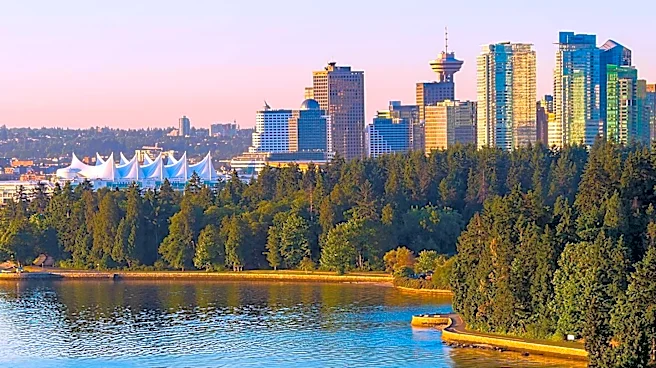
A U.S.-based Vancouverite has ranked Vancouver as Canada's most overrated city, despite its reputation as one of the most beautiful cities globally. The author, who grew up in Vancouver, argues that while the natural surroundings—mountains, ocean, and
trees—are stunning, the city itself has been marred by decades of development, replacing its character with 'ugliest green-glass towers imaginable.' The author contends that Vancouver, often compared to the Amalfi Coast, is merely 'Seattle+' and suffers from 'a cut above' syndrome. While acknowledging its cleanliness, pleasant weather, good food, and proximity to nature, the author states that 'above average isn't the same as great.' The critique highlights a perceived lack of culture, nightlife, distinctive architecture, energy, or unique personality that would qualify it as a truly world-class city, despite its claims. The only exception noted is the city's sushi, which is praised.
Why It's Important?
This perspective offers a critical re-evaluation of Vancouver's global image, particularly from someone with intimate knowledge of both the city and a U.S. viewpoint. For the tourism industry, especially those marketing Vancouver to international visitors, this assessment challenges the prevailing narrative of an idyllic urban paradise. It suggests that while natural beauty is a draw, the urban experience itself may not meet the high expectations set by its reputation. This could influence marketing strategies, potentially shifting focus from generic 'beauty' to specific, unique cultural or architectural offerings if the city wishes to attract a more discerning international clientele. For urban planners and developers, the critique about 'ugly green-glass towers' and the erosion of character could prompt a re-evaluation of architectural and urban development policies, aiming to foster a more distinct and appealing urban environment rather than generic modernity. The comparison to Seattle also implies that Vancouver might be perceived as lacking a unique identity compared to other major North American cities.
What's Next?
The article's critical assessment of Vancouver's urban development and cultural offerings could spark discussions among city officials, tourism boards, and urban planning committees. There might be an increased focus on initiatives aimed at enhancing Vancouver's cultural scene, promoting unique architectural projects, or preserving historical character to counter the 'overrated' label. Local businesses, particularly those in hospitality and entertainment, might need to innovate to create more distinctive experiences that go beyond the city's natural attractions. Furthermore, this critique could lead to a more nuanced marketing approach for Vancouver, acknowledging its strengths while also addressing areas where it falls short of 'world-class' expectations. Public discourse among residents and former residents could also intensify, debating the city's identity and future development trajectory.
Beyond the Headlines
The article touches upon a broader theme of urban identity and the challenge cities face in balancing growth with character preservation. Vancouver's experience, as described, highlights the potential pitfalls of rapid development that prioritizes modernity over unique cultural or architectural expression. This raises questions about what truly constitutes a 'world-class city' beyond economic indicators and natural beauty. It suggests that a city's soul, its distinct personality, and its vibrant cultural life are crucial for its long-term appeal and reputation. The critique also implicitly questions the effectiveness of urban branding that relies heavily on natural endowments without cultivating a compelling urban experience. This could lead to a re-evaluation of how cities measure their success and attractiveness, moving beyond superficial metrics to more qualitative aspects of urban living and cultural richness.