





What's Happening?
The iconic 1978 hit 'Baker Street' by Gerry Rafferty featured significant guitar contributions from session musicians Hugh Burns and Nigel Jenkins. While the song is widely recognized for Raphael Ravenscroft's saxophone solo, which Ravenscroft himself
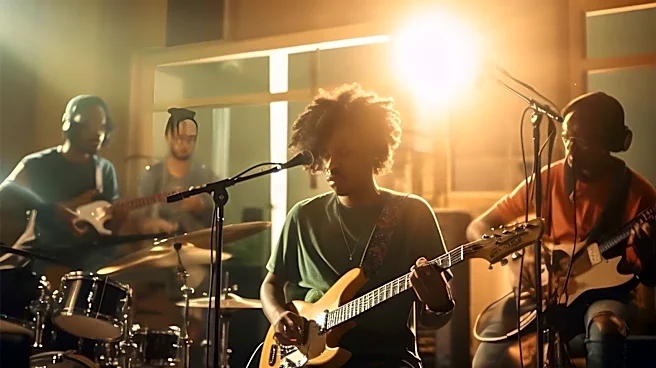
later critiqued as slightly out of tune, the guitar work was integral to the track's success. Gerry Rafferty performed rhythm guitar and lead vocals, but Burns was responsible for the song's distinctive guitar solo. Jenkins also contributed as an auxiliary rhythm guitarist. Burns had a long-standing professional relationship with Rafferty, having worked on six of his albums and multiple records with Rafferty's previous band, Stealers Wheel. Burns recalled being called to the studio in London while on tour with Jack Bruce to record for Rafferty's 'City to City' album, with 'Baker Street' being one of the first songs they worked on.
Why It's Important?
This information highlights the often-understated role of session musicians in creating popular music. While lead artists and prominent instrumental solos frequently receive the most recognition, the contributions of session guitarists like Hugh Burns and Nigel Jenkins are crucial to a song's overall sound and success. 'Baker Street' became a global hit, reaching number three in the UK singles chart and number two in the US pop chart, demonstrating the collective talent involved in its production. The revelation of Burns's extensive collaboration with Rafferty underscores the importance of consistent musical partnerships in an artist's career, even if those contributions are not always front and center in public perception. It also sheds light on the meticulous process of music production, where multiple skilled musicians contribute to a single track.
What's Next?
While the article primarily focuses on historical details of the song's creation, the ongoing interest in 'Baker Street' and its production details suggests a continued appreciation for classic rock music and the artistry behind it. Discussions about the song's composition and the musicians involved may continue in music journalism, fan communities, and academic analyses of popular music. For session musicians, such historical acknowledgments can bring renewed attention to their careers and influence, potentially leading to further recognition or opportunities in the music industry. The enduring popularity of the song ensures that its creation story, including the roles of its guitarists, will remain a topic of interest for music enthusiasts.
Beyond the Headlines
The story of 'Baker Street' and its musicians delves into the broader narrative of artistic collaboration and the division of credit in the music industry. Raphael Ravenscroft's self-criticism of his iconic saxophone solo, despite its massive success, offers insight into the perfectionism often found among professional musicians. The fact that Burns and Jenkins, despite their significant contributions, remained largely in the background compared to Rafferty and Ravenscroft, reflects a common dynamic where session players, though vital, often receive less public acclaim. This dynamic raises questions about intellectual property, recognition, and fair compensation within the music industry, particularly for those who contribute instrumentally without being the primary songwriter or performer. It also underscores how certain musical elements, like the saxophone in 'Baker Street,' can become so dominant that other crucial components are overlooked.