



What's Happening?
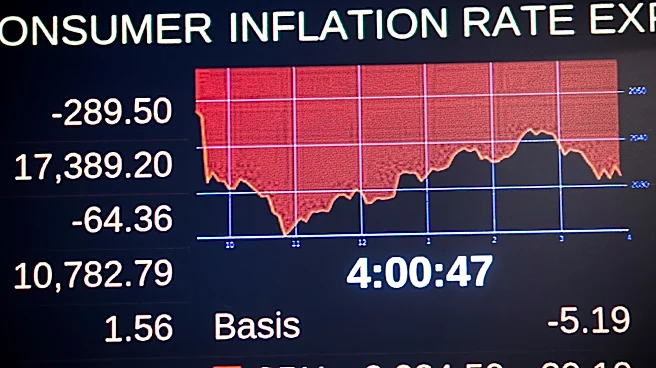
U.S. Treasury yields experienced a significant snap-back this week, driven by higher-than-expected inflation data and rough auctions for 10-year and 30-year Treasury notes. The 10-year Treasury yield spiked by 29 basis points over the four-day week, closing
at 5.15%. This surge included a 10-basis-point increase on Tuesday and a 12-basis-point increase on Thursday. The bond selloff was initiated by 'nasty' CPI inflation data and a challenging 10-year Treasury auction on Tuesday, where a yield of 5.02% was required to sell all $51 billion of notes, 14 basis points higher than the secondary market yield before the CPI release. This was followed by a difficult 30-year Treasury auction on Thursday, which cleared at 5.44%, and 'ugly' PPI data on Friday, indicating a 6.5% inflation rate for businesses, the highest since November 2022. Hawkish commentary from Federal Reserve governors, including Governor Waller's preference for a 50-basis-point hike at the December FOMC meeting due to a 0.30% month-to-month increase in core CPI, further fueled the bond market's reaction. The 2-year Treasury yield also spiked by 37 basis points during the week to 4.88%, reflecting increased rate-hike expectations.
Why It's Important?
The sharp increase in Treasury yields signals a significant shift in market sentiment, primarily driven by persistent inflation concerns and the Federal Reserve's hawkish stance. Higher Treasury yields directly impact borrowing costs across the U.S. economy, affecting everything from mortgage rates and corporate loans to government debt servicing. This can slow economic growth as businesses and consumers face more expensive financing. The 'rough' auctions for 10-year and 30-year notes indicate that investors are demanding higher compensation for holding longer-term U.S. debt, reflecting increased risk perception related to inflation and future interest rate hikes. This could make it more challenging and costly for the U.S. government to finance its expenditures. The 2-year Treasury yield's surge, now 100 basis points above the Effective Federal Funds Rate, strongly suggests that the bond market anticipates multiple rate hikes from the Fed, indicating a belief that current monetary policy is insufficient to control inflation. This environment creates a 'bond bloodbath,' where bond prices fall as yields rise, leading to losses for existing bondholders and potentially impacting financial institutions with large bond portfolios.
What's Next?
The Federal Reserve's December FOMC meeting will be a critical event, with market expectations now leaning towards a potential 50-basis-point rate hike, influenced by recent inflation data and hawkish Fed commentary. Further inflation readings, such as upcoming CPI and PPI reports, will continue to shape market sentiment and the Fed's decisions. The trend of higher Treasury yields is expected to persist as long as inflation remains elevated and the Fed maintains its aggressive stance. This will likely lead to continued pressure on bond prices. Investors will closely monitor future Treasury auctions for signs of demand and the yields required to clear them, which will provide further indications of market confidence and inflation expectations. The ongoing 'bond bear market,' which has been in effect for six years, suggests that the era of low yields may be definitively over, and investors should prepare for a sustained period of higher interest rates. The long-term trend of rising yields remains intact, with any dips being quickly reversed, indicating a challenging environment for fixed-income investors.
Beyond the Headlines
The current surge in Treasury yields and the 'bond bloodbath' represent a fundamental shift in the economic landscape, moving away from the low-interest-rate environment that characterized much of the past two decades. This shift has profound implications for long-term investment strategies, retirement planning, and the overall structure of the U.S. economy. Higher interest rates could lead to a re-evaluation of asset valuations, particularly in sectors that benefited from cheap capital. The increased cost of government borrowing could also intensify debates around fiscal policy and national debt sustainability. Furthermore, the aggressive stance of the Federal Reserve, driven by persistent inflation, highlights the delicate balance between controlling prices and avoiding a recession. The current environment suggests that the market is grappling with the reality of a more inflationary future than previously anticipated, forcing a recalibration of economic models and investment paradigms. The return of yields to levels not seen since the early 2000s signifies a potential end to an extended period of monetary accommodation and the beginning of a new, more challenging era for financial markets.