







What's Happening?
Xcel Energy, a Minneapolis-based electric and natural gas utility holding company, is experiencing renewed market attention after a research firm lowered its valuation target. This adjustment occurred as the company's market value approached a new yearly
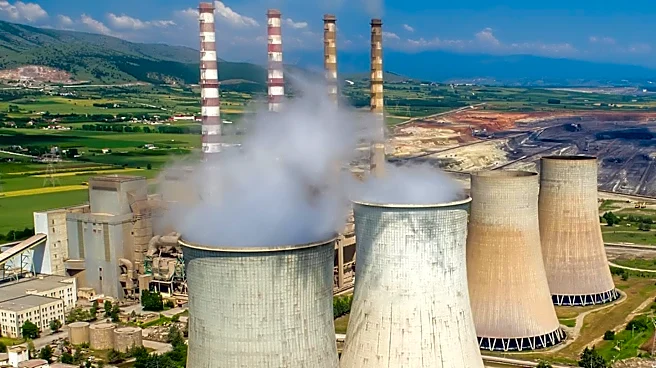
low, prompting a re-evaluation of the utility business in the context of changing financial conditions. Xcel Energy operates across several U.S. states, including Colorado, Michigan, Minnesota, New Mexico, North Dakota, South Dakota, Texas, and Wisconsin, providing electricity generation, transmission, and distribution, alongside natural gas distribution and related energy services. The company's latest quarterly financial figures presented a mixed picture, with adjusted per-unit financial performance exceeding market estimates, yet quarterly sales declined from the comparable period. This highlights a distinction between individual financial measures and the broader operating landscape, which is influenced by factors such as weather, electricity consumption, fuel costs, customer demand, and regulatory conditions. The expansion of data centers and other electricity-intensive activities is also a significant theme impacting the U.S. power industry, requiring utilities like Xcel Energy to focus on grid reliability, generation capacity, and transmission infrastructure.
Why It's Important?
The scrutiny on Xcel Energy is important because it reflects broader trends and challenges within the U.S. utility sector. As a large regulated utility, Xcel Energy's financial performance and operational stability are critical for millions of customers across its eight-state service area. The lowered valuation target, while specific to Xcel, underscores the increasing pressure on utilities to adapt to evolving electricity demand patterns, infrastructure requirements, and regulatory environments. The growth of data centers and other power-intensive industries is significantly altering consumption profiles, necessitating substantial planning and investment in grid reliability and generation capacity. This situation impacts not only Xcel Energy's investors but also the economic stability of the regions it serves, as reliable and affordable energy is fundamental to business operations and residential life. The company's ability to balance infrastructure spending, regulatory conditions, fuel costs, and broader economic activity will set a precedent for how other regulated utilities navigate similar challenges, influencing future energy policy and investment in the U.S. power industry.
What's Next?
Xcel Energy will likely continue to focus on managing its extensive utility network while balancing infrastructure requirements with customer demand and operating expenses. The company's ongoing efforts will involve adapting to evolving generation technologies and grid requirements to maintain dependable electricity service. Regulatory approvals and local energy policies will play a crucial role in influencing the pace and scope of major projects, particularly as the U.S. energy system undergoes structural changes. Market observers will closely monitor future quarterly figures, electricity demand trends, infrastructure investment, natural gas distribution performance, and regulatory developments. The company's broad operating footprint means it will need to address these developments across multiple regions, each with potentially different local regulations and demand conditions. The broader discussion around Xcel Energy will continue to involve how the utility business is viewed amid changing financial conditions and the increasing demand from power-intensive industries, potentially leading to further adjustments in market ratings and investment strategies within the utility sector.
Beyond the Headlines
Beyond the immediate financial implications, the situation with Xcel Energy highlights the complex interplay between technological advancement, environmental considerations, and economic stability in the U.S. The expansion of data centers, while a sign of digital progress, places immense strain on existing power grids and necessitates significant investment in new infrastructure. This raises ethical questions about the sustainability of such growth and the equitable distribution of energy resources. Furthermore, the regulated nature of Xcel Energy's business means that local policies and regulatory decisions are deeply intertwined with its operations, underscoring the political dimension of energy provision. The challenge for Xcel Energy, and indeed for the entire U.S. utility sector, is not just to meet current demand but to anticipate and adapt to future energy landscapes, including the transition to cleaner energy sources, while ensuring grid resilience and affordability for all consumers. This ongoing evolution will shape long-term shifts in energy policy, infrastructure development, and the broader economic fabric of the nation.