







What's Happening?
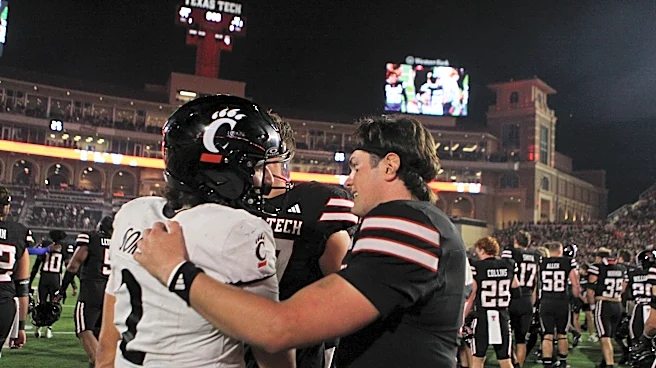
Jason Kelce revealed on the 'Youth Inc.' podcast that his brother, Travis Kelce's, suspension from the University of Cincinnati football team was ultimately beneficial for his career. Travis was kicked off the team during his sophomore year after failing
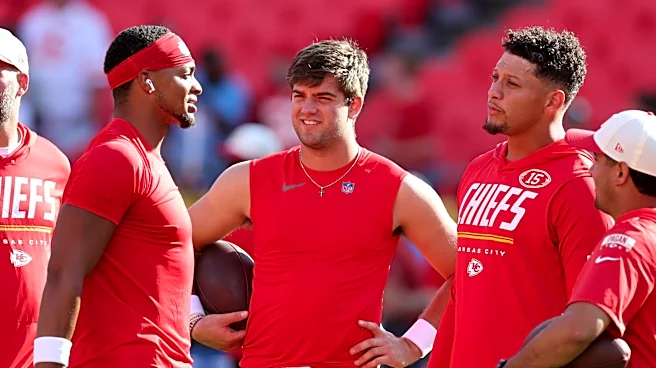
a drug test, which led to him losing his scholarship and campus housing. This period forced Travis to take a telemarketing job and rely on Jason for support. Jason intervened with the coaching staff, pleading for his brother's reinstatement and personally guaranteeing his change in behavior. Travis eventually rejoined the team, committed fully to the tight end position, improved his academic performance, and had a standout senior year, which led to his selection by the Kansas City Chiefs in the 2013 NFL Draft. Jason views this adversity as a crucial turning point that motivated Travis to overcome challenges and develop into the player he is today.
Why It's Important?
This story highlights the significant impact of adversity and second chances on an athlete's development and career trajectory. For Travis Kelce, a moment that could have ended his football aspirations instead became a catalyst for personal growth and professional success. It underscores the importance of mentorship and support, particularly from family, in overcoming significant setbacks. The narrative also offers a perspective on youth sports development, suggesting that early struggles and the need to overcome them can be more beneficial than an uninterrupted path of success. For aspiring athletes, it provides a powerful example of resilience and the idea that negative experiences can be reframed as opportunities for growth. This perspective challenges the notion that a perfect, linear path is the only route to athletic achievement, emphasizing the value of character development forged through hardship.
What's Next?
The narrative of Travis Kelce's comeback from suspension will likely continue to be a motivational story for young athletes and those facing career setbacks. It reinforces the idea that past mistakes do not necessarily define future potential, especially when coupled with genuine effort and support. This perspective could influence how coaches and sports organizations approach disciplinary actions, potentially encouraging more emphasis on rehabilitation and second chances rather than immediate dismissal. For the Kelce brothers, this shared history further solidifies their bond and provides a compelling backstory for their public personas, particularly through their 'New Heights' podcast. The story may also inspire more discussions within sports communities about the role of adversity in building character and fostering long-term success.
Beyond the Headlines
Beyond the immediate sports context, this story touches on universal themes of redemption, personal responsibility, and the transformative power of support systems. It illustrates how a critical intervention, like Jason's plea to the coaches, can alter the course of someone's life. The narrative also subtly critiques the pressures on young athletes and the potential for early success to lead to complacency, suggesting that facing and overcoming significant obstacles can build a more resilient and determined individual. Ethically, it raises questions about the balance between accountability for mistakes and the opportunity for rehabilitation. Culturally, it reinforces the American ideal of the comeback story, where individuals can rise from adversity to achieve greatness, often with the help of those who believe in them. This personal account offers a deeper understanding of the human element behind athletic achievements.