




What's Happening?
Baltimore-based professional organizer Allyson Robinson has gained viral attention for her practical advice on decluttering homes. Drawing inspiration from Marie Kondo's philosophy, Robinson emphasizes the importance of regularly discarding specific everyday
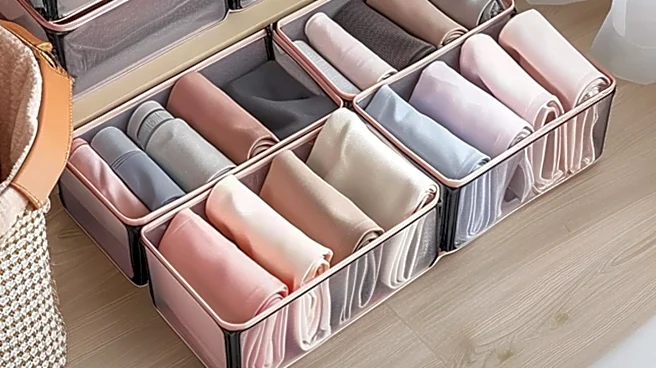
items to maintain a tidy living space. Her recommendations include immediately throwing away old and expired food from refrigerators, pantries, and kitchen cabinets, as these items occupy valuable space. She also advises getting rid of unused cleaning supplies, noting that a limited selection of effective products often correlates with cleaner homes. Furthermore, Robinson suggests replacing old socks and underwear frequently to ensure a well-maintained wardrobe. In additional tips, she recommends discarding empty electronics boxes, excessive or old pens and markers, and outdated textbooks that are no longer needed, encouraging donation or recycling where appropriate.
Why It's Important?
Allyson Robinson's decluttering advice is important because it addresses common sources of household clutter that many Americans face, offering actionable steps to improve home organization and reduce stress. The emphasis on practical, immediate actions like clearing out expired food or unused cleaning supplies can lead to more efficient use of space and a healthier living environment. For consumers, adopting these habits can save money by preventing the purchase of duplicate items and fostering a more mindful approach to consumption. From a broader societal perspective, encouraging donation and recycling of discarded items, as Robinson suggests, contributes to waste reduction and promotes sustainable practices. Her viral success also highlights a growing public interest in home organization and the desire for practical solutions to manage personal belongings effectively, reflecting a cultural shift towards minimalism and intentional living for many U.S. households.
What's Next?
As Allyson Robinson's decluttering tips continue to gain traction, it is likely that more individuals will adopt her practical strategies for home organization. This could lead to an increased demand for organizational products and services that align with her recommendations, such as compact storage solutions for kitchens or sustainable disposal options for unwanted items. Her influence may also encourage other professional organizers and content creators to share similar actionable advice, further popularizing decluttering as a routine practice rather than a one-time event. Retailers might see a shift in consumer purchasing habits, with a greater focus on quality over quantity and a preference for items that serve a clear purpose or 'spark joy.' The ongoing conversation around decluttering could also prompt discussions about consumerism and waste, potentially influencing broader trends in household management and environmental consciousness.
Beyond the Headlines
Beyond the immediate benefits of a tidier home, Robinson's advice taps into deeper psychological and cultural aspects of American life. The act of decluttering, particularly by removing items that no longer serve a purpose or bring joy, can be a powerful exercise in mindfulness and intentional living. It challenges the consumerist tendency to accumulate possessions and encourages a more deliberate relationship with one's environment. The focus on practical, often overlooked items like expired food or old socks, highlights how small, consistent actions can collectively lead to significant improvements in well-being. This approach also subtly critiques the 'more is more' mentality, suggesting that a curated, functional space can contribute to greater peace of mind and reduced mental clutter. The viral nature of her tips indicates a collective yearning for simplicity and control in an increasingly complex world, reflecting a broader societal desire for order and calm in personal spaces.