



What's Happening?
Physical AI (PAI) systems, which enable robots and other real-world devices to perceive, decide, and act in their environments, are projected to represent a $200 billion annual compute opportunity by the 2030s, according to Arm. Currently, the growth
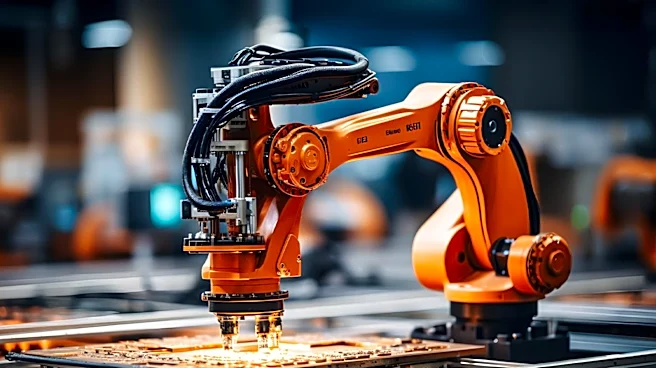
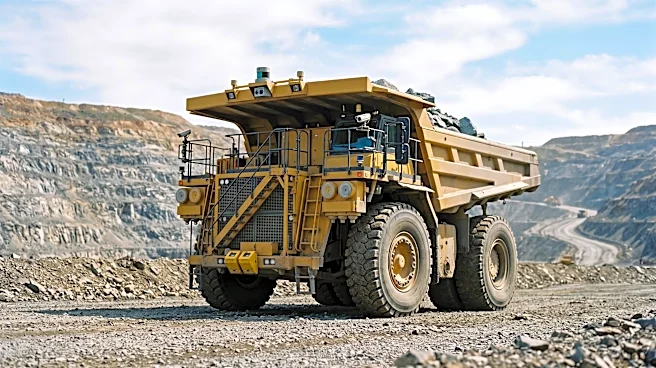
of this market is hindered by high integration costs and custom engineering for diverse products like smart cameras, drones, industrial robots, and robot taxis. Each of these applications has unique compute profiles, form factors, sensors, and power requirements, leading to a lack of standardization. Unlike mainstream products such as PCs and smartphones, PAI products are often developed as custom systems, requiring significant rework and integration for each new design. To address this, Arm has established a PAI business unit focused on creating a new platform specification that can accommodate this diversity. This initiative involves developing a shared language through the Robotics Capability Framework and providing a foundational compute infrastructure with Arm compute, software enablement, and pre-integrated subsystems like Zena Compute Subsystem (CSS).
Why It's Important?
The standardization efforts by Arm and its partners are crucial for unlocking the full potential of the physical AI market. By reducing integration costs and the need for product-specific custom engineering, these initiatives can accelerate the development and deployment of PAI technologies across various industries. A common framework and compute foundation will allow for greater scalability and efficiency in manufacturing and deploying intelligent physical systems. This could lead to a proliferation of advanced robotics and autonomous systems in sectors ranging from logistics and manufacturing to healthcare and transportation. The ability to standardize components and software will benefit original equipment manufacturers (OEMs) by lowering development barriers and fostering innovation. Ultimately, this could drive significant economic growth and create new opportunities for businesses and consumers through more sophisticated and accessible AI-powered physical devices.
What's Next?
Arm, through its Total Design for Physical AI initiative, is bringing together over 100 industry partners to translate the shared language and foundational compute infrastructure into scalable and deployable platforms. The Robotics Capability Framework will continue to develop the definitions for real-world machine capabilities, linking them to underlying hardware and software requirements. The ongoing work will involve assessing the framework's effectiveness and Arm's expanded role in compute, software, and virtual development. The goal is to establish shared capability definitions that can catalyze horizontal value chains, enabling a more streamlined and cost-effective approach to PAI development. This collaborative effort aims to overcome historical barriers to PAI deployment and pave the way for mass-market adoption of intelligent physical systems.
Beyond the Headlines
The push for standardization in physical AI has broader implications beyond just economic growth. It raises questions about the future of human-robot interaction, the ethical considerations of autonomous systems, and the potential for job displacement or creation. As PAI becomes more integrated into daily life, the reliability, safety, and security of these systems will become paramount. The development of a common language and foundation could also foster greater interoperability between different PAI systems, leading to more complex and interconnected robotic ecosystems. This could necessitate new regulatory frameworks and industry standards to ensure responsible development and deployment. The long-term impact could reshape industries, redefine labor markets, and fundamentally alter how humans interact with their physical environment, making the underlying architecture and standardization efforts critical for future societal integration.