




What's Happening?
Broadcom Inc. is emerging as a significant player in the custom AI accelerator market, offering an alternative to NVIDIA's merchant-GPU model. Hyperscalers are increasingly designing custom AI chips tailored to specific workloads, and Broadcom is capitalizing
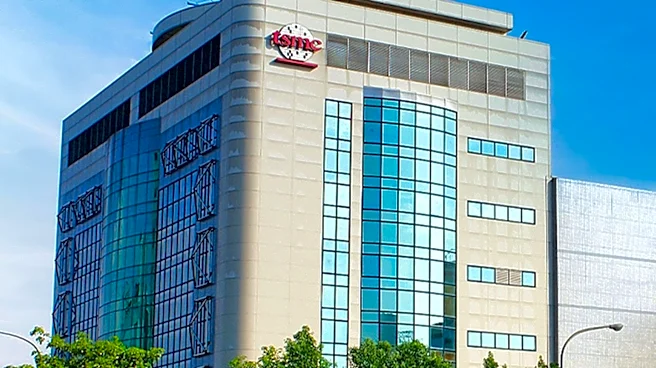
on this trend. For instance, Meta collaborated with Broadcom on its Iris AI accelerator, with Taiwan Semiconductor Manufacturing Company Limited (TSM) handling the fabrication. This strategy allows Broadcom to win if custom silicon continues to scale, providing superior performance per dollar for stable, large-scale workloads. However, the custom chip market carries risks, including concentration on a small number of hyperscalers and potential impacts from delays or architectural changes at these customers. Rising foundry costs could also affect economic viability. TSM, as a manufacturer for Broadcom, NVIDIA, and AMD, benefits regardless of which architecture dominates, as long as leading-edge semiconductor demand remains strong, as evidenced by its record August revenue.
Why It's Important?
This development signifies a crucial shift in the AI chip landscape, moving towards specialized, custom-designed silicon rather than relying solely on general-purpose GPUs. For U.S. industries, particularly cloud computing and data centers, this means access to more efficient and cost-effective AI infrastructure tailored to their unique needs. Broadcom stands to gain significantly by providing these custom solutions, strengthening its position in the high-growth AI market. TSM, as the primary manufacturer, also benefits, highlighting the critical role of advanced foundry capabilities in the global technology supply chain. This trend could lead to increased competition among chip designers and manufacturers, fostering innovation but also potentially creating dependencies on a few key foundries. The move towards custom silicon also impacts the broader economic landscape by influencing investment in AI research and development, and the strategic decisions of major tech companies regarding their hardware infrastructure.
What's Next?
The trajectory of custom AI chip development will largely depend on the continued willingness of hyperscalers to invest in specialized silicon and the ability of companies like Broadcom to deliver these complex solutions efficiently. We can expect to see further collaborations between chip designers and major tech companies to develop more tailored AI accelerators. TSM's role as a critical manufacturing partner will likely expand, reinforcing its importance in the semiconductor ecosystem. The market will also be watching for how NVIDIA and other GPU providers adapt to this growing trend of custom silicon. Potential reactions from stakeholders include increased R&D spending on advanced packaging and integration technologies, and strategic partnerships to secure manufacturing capacity. The long-term implications could include a more diversified and specialized AI hardware market, with different solutions optimized for various AI applications.
Beyond the Headlines
The shift towards custom AI chips reflects a deeper strategic imperative for large tech companies to optimize their infrastructure for specific AI workloads, gaining a competitive edge in performance and cost. This trend highlights the increasing sophistication of hardware-software co-design, where the chip architecture is tightly integrated with the AI models it will run. Ethically, this specialization could lead to concerns about vendor lock-in and the potential for a few dominant players to control critical AI infrastructure. Legally, intellectual property rights for custom designs and manufacturing processes will become even more critical. Culturally, it signifies a move away from a one-size-fits-all approach in computing, embracing bespoke solutions for the most demanding technological challenges. This evolution could also trigger long-term shifts in the semiconductor industry's business models, emphasizing design services and advanced manufacturing partnerships over purely off-the-shelf components.