






What's Happening?
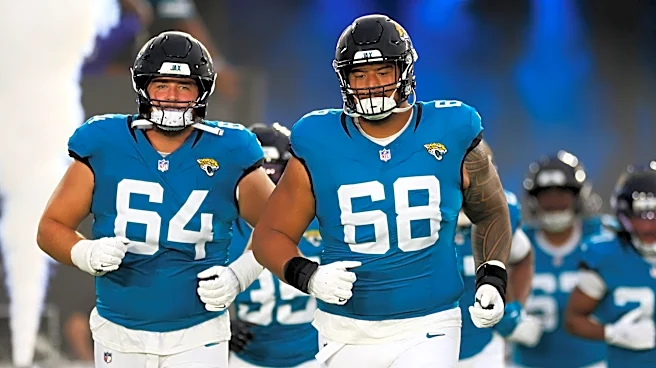
Shahid Khan, owner of the Jacksonville Jaguars, has publicly stated that National Football League (NFL) teams are currently undervalued when compared to franchises in other professional sports leagues. In an interview with CNBC, Khan highlighted the significant
potential for growth in the value of NFL franchises, suggesting it is nearly unlimited. According to CNBC estimates, the average value of an NFL club in 2026 reached $10.36 billion, marking a 35% increase from the previous year. Khan purchased the Jaguars in 2011 for $770 million, and the team is now valued at $9.35 billion, representing an average annual return of 18%. This valuation trajectory suggests that the Jaguars' value could potentially reach $112 billion by 2041, a figure Khan acknowledged as substantial.
Why It's Important?
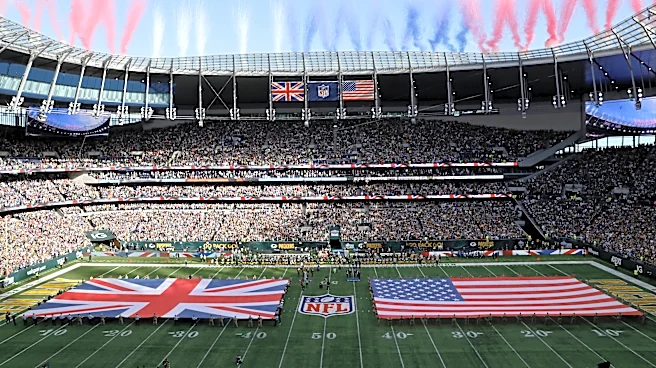
Khan's assertion underscores a significant trend in the U.S. sports industry, indicating a robust and expanding market for professional sports franchises. The continuous appreciation in NFL team values, as evidenced by the Jaguars' growth and recent team sales, reflects strong investor confidence and increasing revenue streams. This trend is crucial for the broader U.S. economy, as it attracts private equity investment, fuels media deal expansions, and stimulates local economic development through stadium projects and community engagement. The rising valuations also highlight the NFL's growing international presence, with a record number of games scheduled outside the U.S., further expanding its market reach and revenue potential. This sustained growth benefits team owners, investors, and local economies, while also solidifying the NFL's position as a dominant force in the global sports landscape.
What's Next?
The continued growth in NFL franchise values is expected to be driven by several factors identified by Khan, including increased involvement from private equity, further expansion of media rights deals, and ongoing efforts by clubs to engage with local communities. Additionally, significant investments in stadium construction and renovations are anticipated to contribute to higher valuations. The league's strategic expansion of its international presence, with a projected increase in games played outside the U.S., will also play a key role in unlocking new revenue streams and market opportunities. Recent team sales, such as the Washington Commanders in 2023 and the Seattle Seahawks, demonstrate a clear upward trend in sale prices and the ratio of sale price to annual revenue, suggesting that future transactions will likely continue this pattern of escalating valuations. These developments indicate a sustained period of financial growth and strategic expansion for the NFL.
Beyond the Headlines
The escalating valuations of NFL teams, as highlighted by Shahid Khan, point to a deeper economic phenomenon where professional sports franchises are increasingly viewed as stable, high-return assets, akin to blue-chip stocks. This trend transcends mere sports entertainment, reflecting a broader shift in investment strategies towards assets with strong brand loyalty, predictable revenue streams from media rights, and significant real estate holdings. The involvement of private equity and the emphasis on international expansion suggest a sophisticated financialization of sports, where teams are not just cultural institutions but global business entities. This could lead to further consolidation of ownership among wealthy individuals and investment groups, potentially altering the traditional fan-owner relationship and emphasizing global market reach over local community ties. The long-term implications include a potential widening gap between the financial capabilities of different leagues and a redefinition of what constitutes a 'successful' sports franchise, moving beyond on-field performance to include global brand equity and asset appreciation.