





What's Happening?
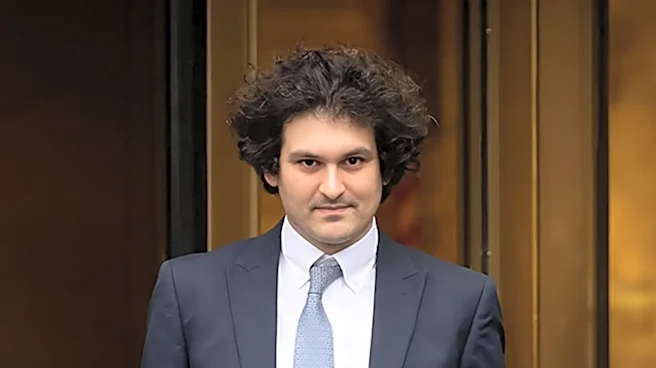
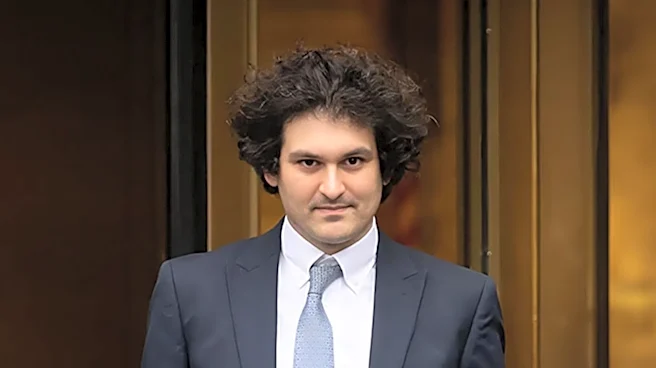
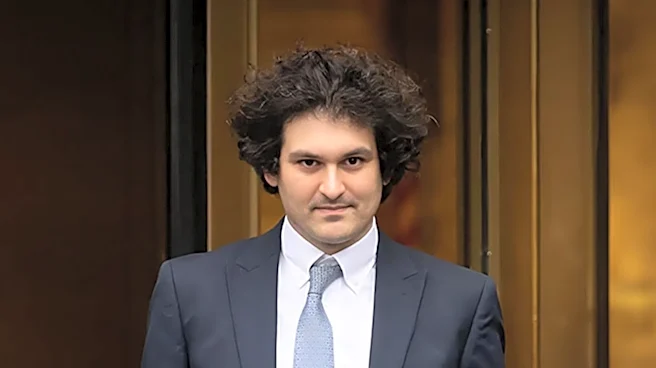
Sam Bankman-Fried, the founder of the now-bankrupt cryptocurrency exchange FTX, has indicated he would consider returning to the cryptocurrency industry after his release from prison. These remarks were made during an interview with Eli Goldfine on November
20, 2026, and reported by Wu Blockchain on November 25, 2026. Bankman-Fried also expressed openness to pursuing careers in artificial intelligence or the broader financial sector. He mentioned that his future choices would depend on his release date and available information at that time. He acknowledged that his reputation, significantly damaged by FTX's collapse, would make it challenging to regain an active role in politics, media, and public discourse. Bankman-Fried was convicted of fraud and related offenses, receiving a 25-year prison sentence on March 28, 2024, along with three years of supervised release and an $11 billion forfeiture order from the U.S. Department of Justice.
Why It's Important?
Bankman-Fried's contemplation of a return to the cryptocurrency industry could reignite discussions about investor confidence, which was severely impacted by FTX's collapse in November 2022. His potential re-entry, even as a hypothetical, highlights the ongoing challenges the crypto sector faces in rebuilding trust and ensuring financial transparency. For the broader financial sector and the burgeoning artificial intelligence industry, his interest suggests a recognition of these fields as significant areas for future engagement, despite his past legal troubles. The primary obstacles to any such return would involve overcoming legal restrictions, re-establishing institutional trust, and rehabilitating his public image, rather than a lack of professional experience. This situation underscores the long-term implications of high-profile financial fraud cases on individual careers and industry perceptions.
What's Next?
Bankman-Fried's remarks do not signify any immediate plans or confirmed business ventures, but rather represent potential career paths he might explore following his eventual release from prison. Any concrete steps toward re-entering the cryptocurrency, AI, or finance sectors would be contingent upon the terms of his release, including any supervised release conditions, and his ability to navigate significant legal and reputational hurdles. The cryptocurrency industry would likely face renewed scrutiny and debate regarding the suitability of individuals with past fraud convictions re-engaging in the sector. Stakeholders, including regulators, investors, and industry leaders, would closely monitor any such developments, potentially leading to calls for stricter oversight or ethical guidelines to prevent similar incidents and protect consumer assets.
Beyond the Headlines
The discussion of Sam Bankman-Fried's potential return to the financial or tech sectors after serving his sentence raises profound ethical and legal questions about rehabilitation, accountability, and the nature of second chances in high-stakes industries. It highlights the tension between an individual's right to pursue a livelihood and the public's need for protection from financial misconduct. The willingness of a convicted fraudster to consider re-entering fields like cryptocurrency and AI, which are often characterized by rapid innovation and evolving regulatory frameworks, could prompt deeper conversations about the criteria for participation in these sectors. This scenario also touches upon the long-term societal impact of financial crimes, not just on victims but also on the broader perception of trust and integrity within critical economic and technological domains.