






What's Happening?
Auburn University students Sophie Salinger and Cayden Peacock have launched Bird & Batter, a new chicken and waffles restaurant concept, operating out of The Incubator at Hey Day Market. This initiative is part of the Horst Schulze School of Hospitality
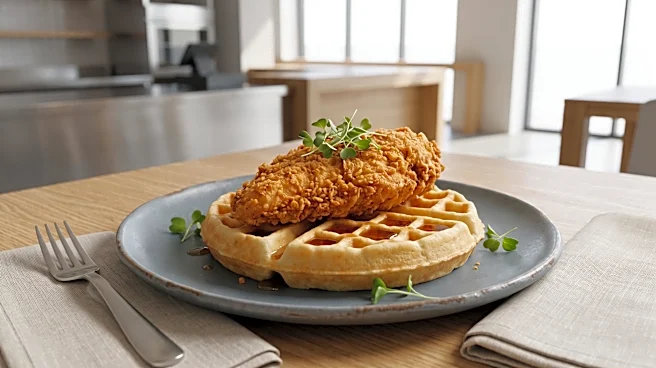
Management's program, which provides student entrepreneurs with the opportunity to develop and run their own food businesses. Salinger and Peacock, who initially entered a pitch competition with separate ideas, were paired by faculty due to similarities in their concepts. Salinger is primarily responsible for the culinary aspects, including menu development and food preparation, while Peacock manages operations and restaurant systems, such as employee training. The restaurant's menu features various chicken and waffle combinations, including the Classic Chick, Hot Chick, Kickin Chick, and Seoul Chick, along with dessert items like brown butter Biscoff banana pudding. Funding for Bird & Batter comes from the hospitality school, with profits reinvested into The Incubator program to support future student concepts.
Why It's Important?
This student-led restaurant venture at Auburn University is significant as it provides invaluable real-world business experience for hospitality management students. By operating Bird & Batter, Salinger and Peacock are gaining hands-on knowledge in critical areas such as menu creation, operational management, employee training, sourcing, and financial oversight. This practical application of academic learning bridges the gap between classroom theory and industry demands, preparing students for successful careers in the competitive food service sector. The Incubator program itself serves as a vital platform for fostering entrepreneurship and innovation within the university setting, demonstrating a commitment to experiential learning. Furthermore, the local sourcing of ingredients and the focus on making items from scratch highlight a growing trend in the food industry towards quality, freshness, and community engagement. The reinvestment of profits back into the program ensures the sustainability of this educational model, benefiting future generations of student entrepreneurs.
What's Next?
Bird & Batter will continue to operate throughout the fall semester, providing Salinger and Peacock with ongoing experience in managing a live restaurant business. They will likely continue to refine their menu, operational processes, and marketing strategies based on customer feedback and sales performance. The success of Bird & Batter will serve as a case study for future student entrepreneurs within The Incubator program, potentially inspiring new concepts and innovations. As the semester progresses, Salinger and Peacock will also be responsible for managing the financial aspects, with sales reviewed monthly to ensure profitability. The program's structure, where profits are reinvested, ensures that the initiative remains a self-sustaining educational resource. Upon the conclusion of their operational period, Salinger and Peacock will have a comprehensive understanding of restaurant management, which will be a significant asset for their future careers in the hospitality industry.
Beyond the Headlines
The establishment of Bird & Batter within a university incubator program reflects a broader educational trend towards integrating entrepreneurial ecosystems directly into academic curricula. This model moves beyond traditional internships by giving students full ownership and responsibility for a business, albeit with institutional support. It fosters a unique blend of academic rigor and practical application, allowing students to confront real-world challenges and develop problem-solving skills in a controlled environment. This approach not only enhances individual student capabilities but also contributes to a culture of innovation within the university, potentially leading to the creation of new businesses and job opportunities in the wider community. The emphasis on local sourcing and scratch-made items also speaks to evolving consumer preferences for transparency and quality in food, influencing how future hospitality professionals are trained to meet these demands. This initiative serves as a blueprint for how educational institutions can become active participants in economic development and talent cultivation.