


What's Happening?
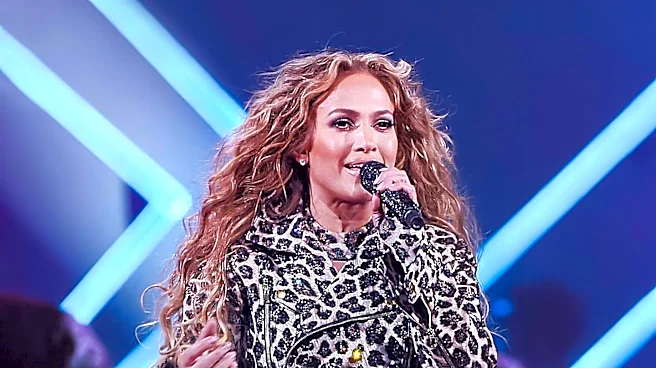
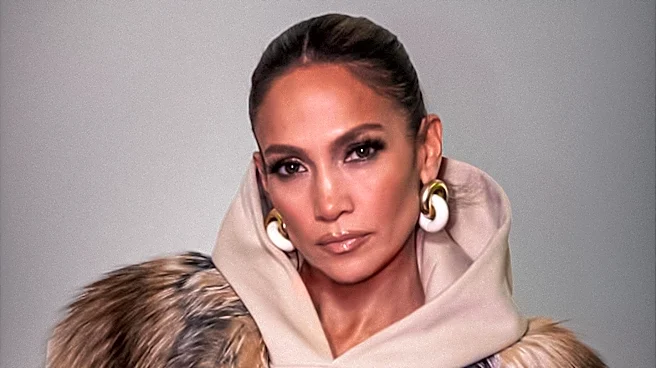
Jennifer Lopez stated in a recent interview with The New York Times that her non-white ethnicity has historically made it challenging to secure acting roles in Hollywood. She claims that she has often had to create her own opportunities because she was
not considered a 'typical' white actress, a situation she believes persists today. Lopez acknowledged that while the screen industry has made progress in diversity, certain preferences still exist. Her recent film credits include 'Office Romance' (2026), 'Shotgun Wedding' (2022), 'Hustlers' (2019), and 'Second Act' (2018). She also highlighted her leading roles in the late 1990s and early 2000s, such as 'The Wedding Planner,' 'Out of Sight,' 'Maid in Manhattan,' and her portrayal of Selena Quintanilla-Perez in 'Selena.'
Why It's Important?
Lopez's statements bring renewed attention to ongoing discussions about diversity and representation within the Hollywood film industry. Her claims, coming from a prominent Latina entertainer with a long career, highlight the perceived systemic barriers that actors of color may face, even those who achieve significant success. This narrative can influence public perception of Hollywood's inclusivity efforts and potentially fuel further calls for equitable casting practices and opportunities. The discussion also underscores the pressure on individuals to 'create their own lane' when traditional avenues are perceived as limited, impacting career trajectories and creative output within the entertainment sector. The differing opinions on her claims also reflect a broader societal debate on racial equity and opportunity.
What's Next?
The claims made by Jennifer Lopez are likely to continue to generate discussion within the entertainment industry and among the public. While Lopez acknowledged some progress in diversity, her remarks suggest that the industry still has work to do. This could lead to further scrutiny of casting processes, studio hiring practices, and the types of stories being greenlit. Other actors and industry professionals may weigh in, either supporting or refuting her perspective, potentially sparking more widespread conversations about systemic biases. The ongoing dialogue could influence future initiatives aimed at promoting greater inclusivity and representation in Hollywood, potentially impacting how talent is scouted, developed, and cast in upcoming productions.
Beyond the Headlines
Jennifer Lopez's comments delve into the deeper cultural and ethical dimensions of representation in media. Her assertion that she had to 'create her own lane' speaks to the resilience and entrepreneurial spirit often required by individuals from underrepresented groups to succeed in industries with historical biases. This narrative extends beyond Hollywood, reflecting broader societal challenges where individuals from diverse backgrounds may encounter implicit or explicit barriers. The debate surrounding her claims also highlights the complexity of discussing privilege and disadvantage, even for highly successful public figures. It prompts a re-evaluation of what constitutes 'success' and whether it truly signifies an equal playing field, or if it often comes despite, rather than because of, existing structures.