
What's Happening?
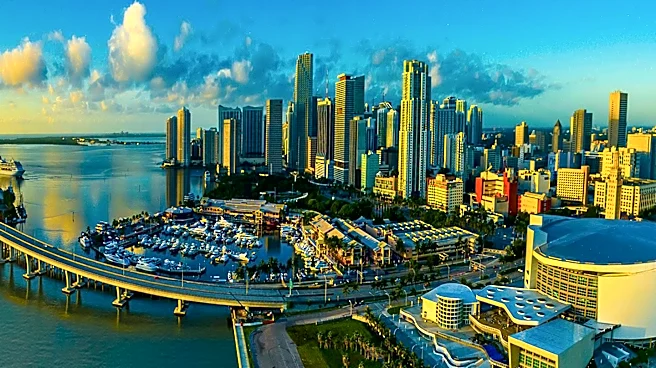
The Dubai International Chamber has opened a new representative office in Miami, Florida, marking its second such office in the United States. This initiative aims to strengthen business ties and expand
trade and investment cooperation between Dubai and the U.S. The Miami office will engage with public and private sector stakeholders, deepen collaboration with the American business community, and highlight Dubai's advantages as a global business hub. It will also provide market intelligence to assist American companies in entering the Dubai market and expanding internationally from there. Conversely, the office will support Dubai-based companies seeking to expand into the U.S. by offering specialized market insights, identifying trade and investment opportunities, and connecting them with local partners. This expansion follows the opening of Dubai International Chamber's New York office in November 2025. The move comes amidst growing bilateral non-oil trade, which reached AED 121.8 billion in 2025, a 4.6% increase from the previous year, and a significant rise in American companies registered with the Dubai Chamber of Commerce.
Why It's Important?
The establishment of the Miami office signifies a strategic effort by Dubai to deepen its economic relationship with the United States, particularly by leveraging Miami's position as a gateway to the Americas. This expansion is crucial for U.S. businesses looking to access the Middle Eastern, African, and Asian markets, as Dubai serves as a significant re-export and logistics hub. The office will facilitate direct connections and provide essential resources, potentially reducing barriers for American companies seeking international expansion. For Dubai, increasing its presence in the U.S. aims to attract more American foreign direct investment and diversify its economic partnerships. The growing bilateral trade figures and the increasing number of American companies operating in Dubai underscore the mutual economic benefits of such initiatives. This move could lead to increased trade volumes, new investment opportunities, and enhanced cultural and business exchanges between the two regions, benefiting various sectors from technology to logistics and finance.
What's Next?
The new Miami office will immediately begin its operations by strengthening engagement with key public and private sector stakeholders in the U.S. It will focus on deepening cooperation with the American business community and actively promoting Dubai's competitive advantages as a global business destination. Over the coming months, the office is expected to provide market intelligence and support services to American companies interested in the Dubai market, as well as to Dubai-based companies looking to expand into the U.S. This will involve identifying promising trade and investment opportunities and facilitating connections with local partners. The success of this office will likely be measured by the growth in bilateral trade, the number of new business partnerships forged, and the increase in investment flows between Dubai and the U.S. Future initiatives may include organizing trade missions, investment forums, and networking events to further cement these economic ties.
Beyond the Headlines
The opening of the Miami office reflects a broader trend of global cities establishing direct economic diplomacy outposts to foster international trade and investment, bypassing traditional governmental channels to some extent. This strategy allows Dubai to directly engage with specific regional economies within the U.S., tailoring its outreach to local business ecosystems. Miami's selection highlights its growing importance as an international business hub, particularly for Latin American connections, which could offer Dubai-based companies a strategic entry point into the wider Americas market. This initiative also underscores Dubai's ongoing efforts to diversify its economy beyond oil, positioning itself as a global services, logistics, and innovation hub. The long-term implications could include increased competition among U.S. cities to attract similar international investment offices, further decentralizing global trade relations and creating more direct city-to-city economic partnerships.