




What's Happening?
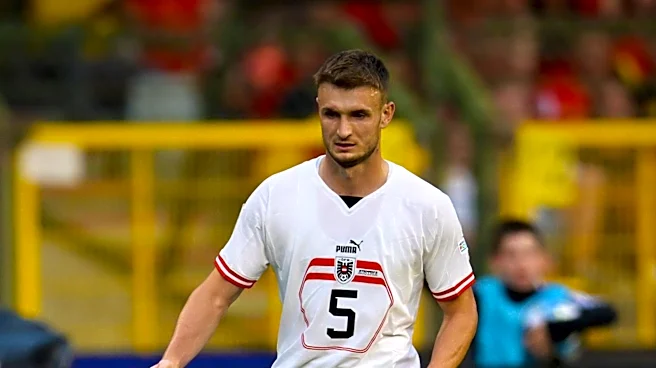
UEFA has classified the upcoming Nations League match between Austria and Israel in Linz as a 'high-risk match' due to the prevailing political climate and sensitivities surrounding the encounter. Austrian authorities are preparing a special security
operation for the Thursday game, with two demonstrations already registered in Linz. The Austrian Football Association has been in close coordination with national authorities and representatives of the Israeli team. UEFA is also directly involved, planning a security meeting the evening before the game and deploying two security officers. Austrian Football Association CEO Bernhard Neuhold stated that the aim is to take precautions in all areas to ensure a safe experience for all groups at the stadium. Israeli security personnel are also assisting with preparations.
Why It's Important?
This 'high-risk' designation and the extensive security measures highlight the increasing intersection of international sports and geopolitical tensions. For U.S. sports organizations and event planners, this situation serves as a critical case study in managing security for high-profile international events, especially when political sensitivities are involved. The need for close coordination between national authorities, international sports bodies, and participating teams, including the involvement of foreign security personnel, underscores the complex challenges. This event could influence how U.S. entities assess and mitigate risks for international competitions hosted domestically or involving U.S. teams abroad, potentially leading to enhanced security protocols and intelligence sharing. The incident also reflects a broader trend where sporting events become platforms for political expression, demanding robust and adaptable security strategies.
What's Next?
Ahead of the match, a special organizational meeting will be held on matchday, in addition to the UEFA security meeting the evening prior. Representatives from UEFA, the Austrian association, local authorities, and the Israeli side are expected to attend these meetings to finalize security arrangements. The focus will be on managing the registered demonstrations and ensuring the safety of all attendees. Austrian officials, while acknowledging the implications, expressed confidence in their experienced organizing team and established procedures for high-risk matches. The outcome of this event, particularly regarding security management and crowd control, will likely be reviewed by international sports bodies and security experts to inform future best practices for similar high-stakes events.
Beyond the Headlines
The classification of the Austria-Israel match as 'high risk' extends beyond immediate security concerns, touching upon the delicate balance between freedom of expression and public safety at international sporting events. The presence of registered demonstrations alongside the match underscores the role of sports as a global stage for political and social commentary. This situation could lead to broader discussions within international sports federations, including those relevant to U.S. participation, about policies regarding political displays at games and the responsibilities of host nations. It also highlights the psychological impact on athletes and fans when political tensions overshadow the sporting competition. The long-term implication could be a re-evaluation of venue selection for international tournaments, prioritizing locations with lower geopolitical risk or more robust capabilities to manage complex security challenges.