
What's Happening?
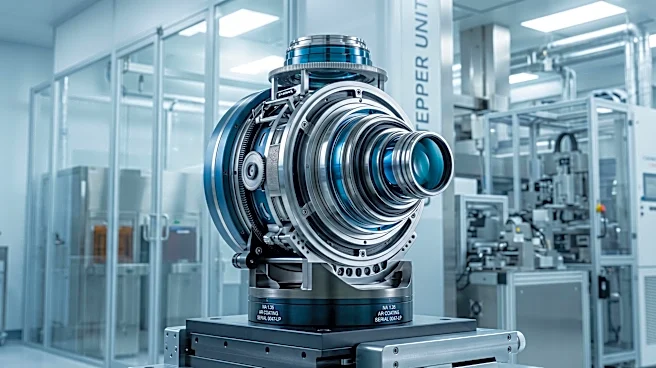
ASML Holding N.V. (ASML), a Dutch manufacturer of extreme-ultraviolet lithography systems crucial for advanced semiconductor production, saw its U.S.-listed shares increase by 8.77% to $1,377.21. This
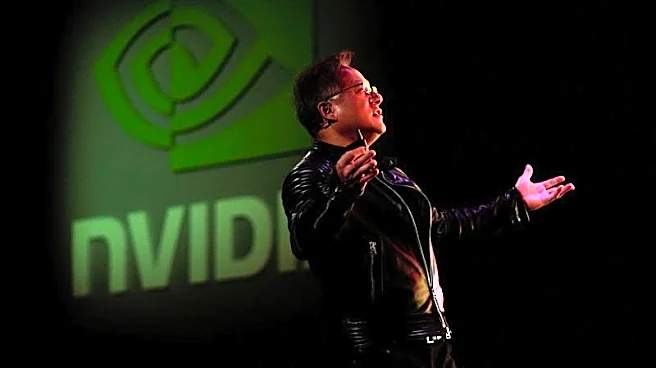
surge followed the reinstatement of Jensen Huang as CEO of Nvidia, a move that significantly re-rated AI-linked chip stocks. The market interpreted Nvidia's decision as a strong signal that its roadmap and customer spending commitments for AI infrastructure remain robust, reducing concerns about a potential pause in AI capital expenditure. ASML's stock movement was not driven by any company-specific announcement but rather by broader sector sentiment, with other European chip-equipment manufacturers also experiencing gains. Nvidia's recently reported quarterly revenue of $115.8 billion, a 103% year-over-year increase, further reinforced the ongoing high spending in the AI sector, directly benefiting ASML as a key supplier of the tools necessary for producing leading-edge AI chips.
Why It's Important?
ASML's performance is a critical indicator for the broader semiconductor industry and the AI sector, given its near-monopoly in advanced lithography equipment. The rise in ASML's stock, triggered by Nvidia's leadership stability, underscores investor confidence in the continued growth and investment within the artificial intelligence infrastructure. This development suggests that major players like Nvidia are committed to their long-term AI strategies, which translates into sustained demand for ASML's high-tech machinery. For the U.S. technology sector, this indicates a healthy outlook for chipmakers and related industries that rely on advanced semiconductors. A stable and growing demand for AI chips means continued innovation and investment in computing power, impacting everything from data centers to consumer electronics. Conversely, any perceived instability in AI spending could negatively affect ASML and the entire chip supply chain, highlighting the interconnectedness of these global technology giants.
What's Next?
Investors are now looking ahead to ASML's fourth-quarter results, expected in late January, with particular attention to its order bookings and 2027 outlook. These reports will provide crucial insights into the sustained demand for extreme ultraviolet (EUV) lithography from leading-edge logic and high-bandwidth memory customers. Additionally, any commentary from ASML regarding Chinese demand, especially as export restrictions continue to evolve, will be closely scrutinized. Beyond ASML's internal reports, broader sector developments will remain influential. Nvidia's CEO, Jensen Huang, is scheduled for a closed-door House interview on December 1 and a Senate Banking Committee hearing on December 3. Any outcomes from these engagements, particularly concerning Washington's scrutiny of AI chip flows, could rapidly shift market sentiment and impact ASML's stock trajectory. The market will be watching for potential capital expenditure upgrades across the memory and foundry complex as a key upside risk.
Beyond the Headlines
The rally in ASML's stock, while immediately tied to Nvidia's corporate decision, reflects deeper implications regarding the global technological arms race and supply chain vulnerabilities. ASML's unique position as the sole provider of certain critical chip manufacturing equipment makes it a geopolitical linchpin. The ongoing U.S. export restrictions aimed at limiting China's access to advanced semiconductor technology directly impact ASML's operational environment and strategic decisions. This situation highlights the intricate balance between commercial interests and national security objectives, where a company's sales to one region can have significant international ramifications. Furthermore, the reliance of the entire AI industry on a single supplier for such crucial technology raises questions about supply chain resilience and potential bottlenecks, underscoring the strategic importance of lithography technology in shaping future technological landscapes and economic power dynamics.