
What's Happening?
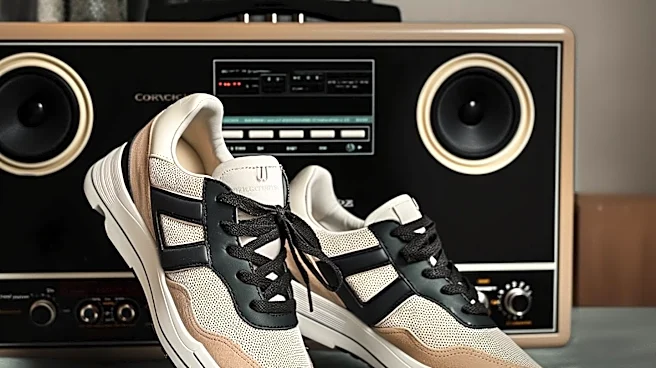
Miu Miu is reintroducing its 'Bubble' sneakers and kitten heels, designs originally featured in its late 1990s and early 2000s collections. The updated Bubble sneaker, a centerpiece of Miu Miu’s recent fall campaign, features an orthopedic sole and rubberized
dots, giving it a distinctive, almost cartoonish profile. This revival is part of a broader trend in fashion where brands are drawing inspiration from their archives. The collection also includes knee-high stretch boots, clogs, and loafers incorporating the bulbous sole. These designs are characterized by their 'offbeatness' and fit into the 'wrong shoe' theory, which embraces footwear that intentionally contrasts with an outfit or features unusual details. The brand's previous collaborations with New Balance also set a precedent for luxury sneakers, and this new release continues Miu Miu's tradition of unique footwear.
Why It's Important?
The reintroduction of Miu Miu's Bubble sneakers and kitten heels underscores the significant influence of nostalgia on the U.S. fashion industry. This trend impacts consumer purchasing habits, as brands leverage past successes to create new demand. For retailers and designers, understanding and adapting to this cyclical nature of fashion is crucial for market relevance and sales. The 'wrong shoe' trend, exemplified by Miu Miu's latest offerings, also challenges conventional styling norms, potentially influencing how consumers approach fashion and personal expression. This shift can lead to increased experimentation in footwear choices and a greater acceptance of unconventional designs, affecting both high-end and fast-fashion markets. The success of such revivals can also dictate future design directions and marketing strategies for other fashion houses.
What's Next?
The continued success of Miu Miu's nostalgic revivals could prompt other luxury brands to delve deeper into their own archives for inspiration, leading to a wave of reissued designs across various product categories. Consumers can expect to see more 'offbeat' and unconventional footwear options entering the market, potentially influencing mainstream fashion trends. This trend may also encourage collaborations between luxury brands and athletic wear companies, further blurring the lines between high fashion and casual wear. Retailers will likely adjust their inventory to accommodate this demand for nostalgic and unique items, while fashion publications will continue to highlight and analyze these cyclical trends, shaping public perception and consumer interest. The long-term impact could be a more eclectic and less rigid approach to fashion, with personal style taking precedence over strict adherence to traditional trends.
Beyond the Headlines
Beyond the immediate commercial implications, the fashion industry's reliance on nostalgia reflects broader societal trends, such as a yearning for simpler times or a desire for comfort and familiarity in an increasingly complex world. This phenomenon can be seen as a cultural commentary, where fashion acts as a mirror to collective sentiments. The 'wrong shoe' trend, in particular, might symbolize a growing rejection of rigid aesthetic rules and an embrace of individuality and playful self-expression. Ethically, brands must navigate the line between genuine homage and mere replication, ensuring that reissued designs offer fresh perspectives rather than simply capitalizing on past successes. This trend also raises questions about sustainability, as the constant cycle of new and revived trends can contribute to overconsumption if not managed responsibly.