





What's Happening?
Final Cut Pro for Mac has introduced a new feature that simplifies the creation of multilingual closed captions for video projects. This update allows users to generate captions in multiple languages by duplicating an existing set of finished captions and
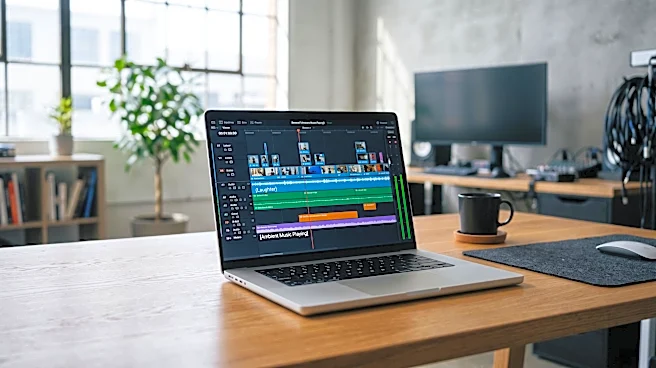
then translating the duplicate set. The process involves completing captions in a primary language, selecting all created captions, and then choosing the 'Duplicate Captions to New Language' option from the Edit menu or by control-clicking the selected captions. This action creates a new closed caption lane in the timeline for the chosen language. Users can then double-click individual captions or select them and press Control-Option-C to open the closed caption editor and input the translation. The feature aims to streamline the workflow for content creators who need to provide accessibility and reach broader audiences with their video content. It also includes tools for navigating between captions, adjusting their duration by trimming start or end points, and syncing captions with their corresponding video clips by dragging them in the timeline.
Why It's Important?
This enhancement in Final Cut Pro for Mac is significant for content creators and media professionals, particularly those targeting diverse, global audiences. By simplifying the process of creating multilingual closed captions, the update directly addresses the growing demand for accessible content and broader linguistic reach. This feature can reduce the time and resources previously required for manual translation and synchronization of captions across multiple languages, thereby increasing efficiency in post-production workflows. For businesses and independent creators, this means a more cost-effective way to comply with accessibility standards and expand their market penetration. The ability to easily duplicate and translate captions ensures consistency in timing and placement across different language versions, improving the viewer experience. This development also supports the trend towards more inclusive media consumption, allowing non-English speaking audiences or those with hearing impairments to engage more fully with video content.
What's Next?
Content creators utilizing Final Cut Pro for Mac are expected to integrate this new multilingual captioning feature into their post-production workflows. This will likely lead to an increase in the availability of videos with captions in multiple languages, enhancing accessibility and global reach for various media projects. Software updates from Apple may further refine this feature, potentially introducing more advanced translation tools or integration with external translation services. Video production houses and independent creators will likely adapt their standard operating procedures to leverage this efficiency, potentially leading to a higher volume of localized content. The feature could also influence industry standards for video accessibility, encouraging more widespread adoption of multilingual captioning as a standard practice rather than an optional add-on. Training resources and tutorials for this new functionality are also likely to emerge, helping users maximize its benefits.
Beyond the Headlines
The introduction of streamlined multilingual captioning in Final Cut Pro for Mac reflects a broader industry shift towards global content consumption and digital inclusivity. This feature underscores the increasing importance of accessibility in media, moving beyond basic compliance to actively facilitate engagement for diverse linguistic groups and individuals with hearing impairments. Ethically, it promotes equitable access to information and entertainment, breaking down language barriers that often exclude significant portions of the global audience. Legally, it helps content creators meet evolving accessibility regulations in various countries, reducing potential liabilities. Culturally, it enables a richer exchange of ideas and narratives across different linguistic communities, fostering greater understanding and appreciation of diverse perspectives. In the long term, this could contribute to a more interconnected digital media landscape where language is less of a barrier to content consumption and creation, potentially influencing how stories are told and shared globally.