







What's Happening?
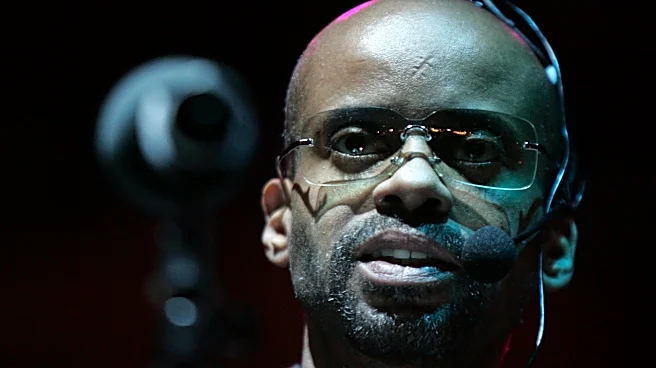
Juan Atkins, a seminal figure in the creation of techno music, has died at the age of 64. Born in 1962, Atkins was instrumental in transforming Detroit's post-industrial landscape into a hub for experimental electronic sounds. He began his musical journey
playing bass and drums in funk bands before receiving a synthesizer at age fifteen, which became central to his career. Atkins formed the duo Cybotron with Rick Davis, producing influential tracks like "Alleys of Your Mind" and "Clear," which foreshadowed techno and hip-hop beats. He also co-founded The Belleville Three with Derrick May and Kevin Saunderson, a trio that energized Detroit's party scene with a blend of disco, soul, funk, and electro-pop. Atkins' music was deeply influenced by funk master George Clinton and the German electronic band Kraftwerk, leading to his unique proto-techno sound.
Why It's Important?
Juan Atkins' contribution to music is profound, as he is credited with coining the term 'techno' and pioneering the genre. His work provided a soundtrack to the utopian visions of futurist Alvin Toffler, viewing his music as more than just dance music but as a reflection of digital and urban revolutions. Atkins' innovative use of synthesizers and drum machines, combined with his futuristic vision, laid the foundation for the global rave movement of the 1990s. He established his own record label, Metroplex, further solidifying his influence. His approach, often creating music under pseudonyms like Model 500, emphasized the break from pop music's star and emotion cult, positioning the artist as an anonymous, robotic figure, which was a radical concept at the time.
What's Next?
The passing of Juan Atkins will likely prompt a renewed appreciation for his extensive body of work and his foundational role in electronic music. Expect to see increased retrospectives, documentaries, and tributes from the music community worldwide, particularly in cities like Berlin and Zurich, which had strong connections to Detroit techno. His influence will continue to be studied and celebrated by musicologists and new generations of electronic artists. The concepts he explored, such as futurism and the relationship between technology and music, will remain relevant in discussions about the evolution of electronic genres and their cultural impact. His legacy will undoubtedly inspire future artists to push the boundaries of sound and explore new musical territories.
Beyond the Headlines
Atkins' story highlights the transformative power of music in response to societal change. The decline of Detroit's auto industry created a unique environment where abandoned factories became laboratories for new sounds, reflecting the city's industrial past and its uncertain future. His music, often dark and swirling, captured the essence of this transition. Furthermore, Atkins' deliberate use of pseudonyms and his embrace of an anonymous, robotic persona challenged traditional notions of artistic identity and celebrity in music. This approach emphasized the music itself over the individual, a concept that resonated deeply within the electronic music scene and continues to influence how artists present themselves in the digital age. His work also underscores the global interconnectedness of music scenes, as Detroit techno profoundly impacted European rave culture.