



What's Happening?
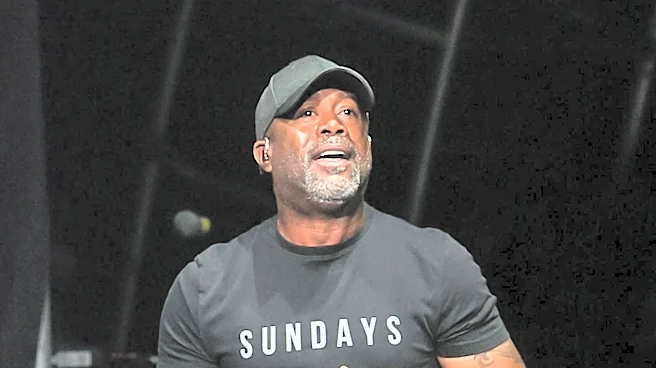
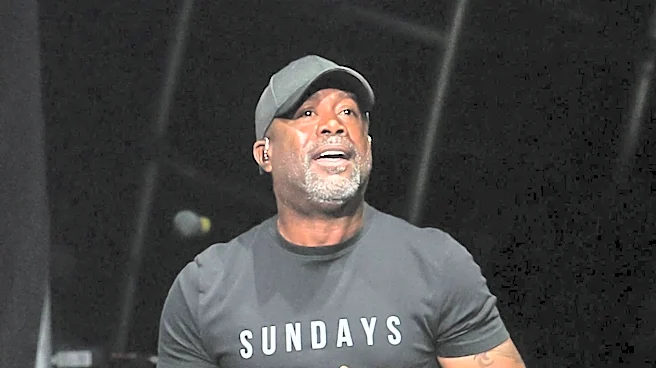
Darius Rucker, a prominent country music artist, has openly discussed the criticism he has faced from within the Black community for his career in country music. In a clip from the Bobby Bones podcast 'Bobbycast' and in a 'People Magazine' profile, Rucker recounted
instances where he was questioned about his choice of genre, including a direct encounter where a woman asked if he knew he was Black. Rucker expressed that while he anticipates racism from the 'White side' of the industry, criticism from the Black community 'crushes his soul.' He highlighted a conversation with Charley Pride, who noted the lack of recognition for Black country artists in traditional Black media outlets like 'Ebony' or 'Jet,' despite their significant achievements in country music. Rucker's comments come amidst the release of his documentary, 'Darius Rucker: They Called Me Hootie,' and contribute to a broader discussion about the experiences of Black artists in country music.
Why It's Important?
Rucker's statements shed light on a less frequently discussed aspect of racial dynamics within the music industry: the internal pressures and criticisms faced by Black artists who venture into genres traditionally dominated by other racial groups. This internal critique can be as, if not more, impactful than external racism, as it challenges an artist's identity and sense of belonging within their own community. His experience underscores the complex racial landscape of American music, where artists may feel compelled to conform to certain genre expectations based on their race. The lack of support from traditional Black media for Black country artists, as noted by Rucker and Pride, also points to a systemic issue that can hinder visibility and career progression for these musicians, affecting their ability to reach broader audiences and gain mainstream recognition within their own cultural sphere.
What's Next?
Rucker's candid discussions are likely to continue fostering dialogue about race, genre, and identity in music, particularly within the country music landscape. His documentary, 'Darius Rucker: They Called Me Hootie,' will further amplify these conversations, potentially encouraging more Black artists to share their experiences and challenges. The ongoing debate may also prompt traditional Black media outlets to re-evaluate their coverage of diverse musical genres, potentially leading to increased recognition and support for Black country artists. This could contribute to a more inclusive music industry where artists are celebrated for their talent and passion, regardless of genre or racial background, and where internal community support is as strong as external validation.
Beyond the Headlines
The deeper implications of Rucker's experience extend to the concept of cultural gatekeeping and the expectations placed on individuals based on their racial identity. His narrative challenges the notion that certain genres 'belong' to specific racial groups and highlights the emotional toll of navigating these societal constructs. The criticism from within the Black community, as described by Rucker, reveals a complex interplay of identity, representation, and the desire for collective upliftment. It prompts a reflection on how communities define and support their members' artistic endeavors, and whether such definitions inadvertently limit individual expression. This situation also underscores the importance of diverse narratives in media and education, as a lack of historical context regarding Black contributions to country music can perpetuate misconceptions and internal divisions.