







What's Happening?
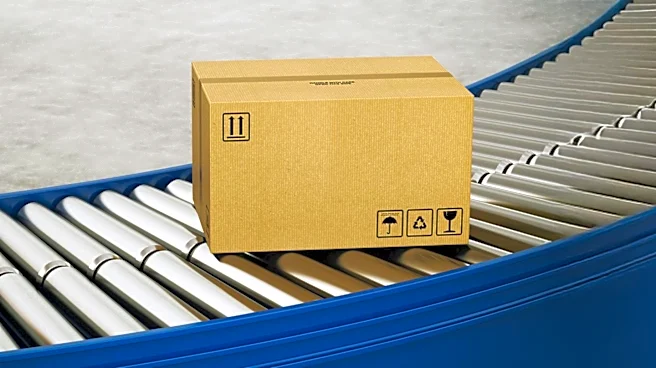
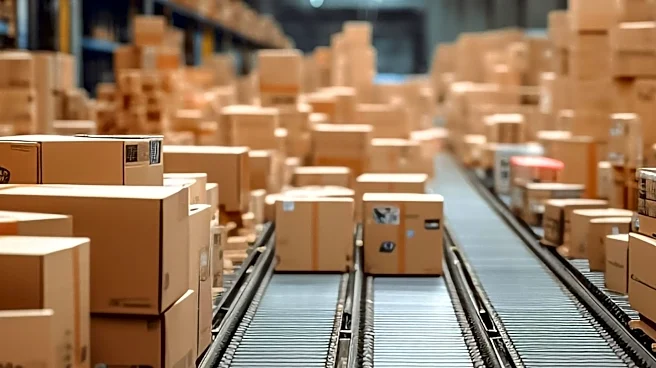
Logos Logistics is promoting a warehousing approach centered on continuous product movement rather than static storage. The company offers both multi-client and dedicated warehousing models to cater to diverse business needs, including shared warehouse
space for flexibility and customized operations for larger requirements. This strategy integrates various services such as fulfillment, cross-docking, sequencing, inspection, and inventory management. Logos Logistics aims to provide businesses with the necessary warehouse capacity without forcing them into a uniform model, supporting industries like automotive, e-commerce, batteries and electronics, industrial and aerospace, food and beverage, consumer and retail, and packaging and plastics. The company highlights that effective warehousing should offer greater visibility, operational flexibility, and reduce the logistical burden on internal teams.
Why It's Important?
This shift in warehousing philosophy is crucial for U.S. businesses facing increasing inventory levels, expanding SKU counts, and more demanding customer expectations. Traditional storage models can become bottlenecks, consuming excessive labor, space, and internal resources. By focusing on keeping products moving, businesses can mitigate these challenges, improve efficiency, and respond more effectively to market demands. The ability to choose between multi-client and dedicated warehousing allows companies to scale operations, manage costs, and adapt to seasonal fluctuations without significant capital investment in physical infrastructure. This approach directly impacts supply chain resilience and competitiveness, particularly for industries with high-volume, time-sensitive products or complex distribution networks.
What's Next?
Businesses are expected to increasingly evaluate their warehousing strategies, moving away from simple storage solutions towards more dynamic, service-oriented models. Logos Logistics and similar third-party logistics (3PL) providers will likely see growing demand for integrated warehousing services that offer advanced inventory visibility and value-added operations. Companies will need to assess their current logistics programs to identify areas where outsourcing or adopting more flexible warehousing solutions can enhance efficiency and reduce operational strain. The trend towards specialized services like cross-docking, kitting, and returns processing will continue to grow, requiring logistics partners to offer comprehensive solutions that can adapt to evolving market needs and customer expectations.
Beyond the Headlines
The emphasis on 'keeping products moving' reflects a broader evolution in supply chain management, driven by e-commerce growth and the demand for faster delivery times. This paradigm shift moves warehousing from a cost center to a strategic asset that can unlock significant competitive advantages. It also highlights the increasing reliance on technology, such as Warehouse Management Systems (WMS), to provide real-time visibility and control over inventory. The ethical implications include ensuring fair labor practices within these fast-paced environments and managing the environmental impact of increased transportation and processing. Ultimately, this approach fosters a more agile and responsive supply chain, critical for businesses navigating an unpredictable global market.