







What's Happening?
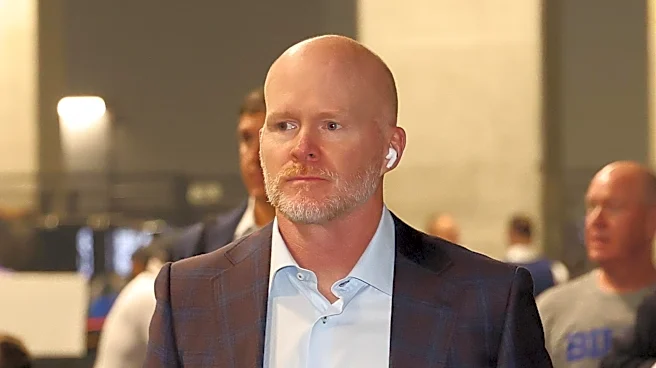
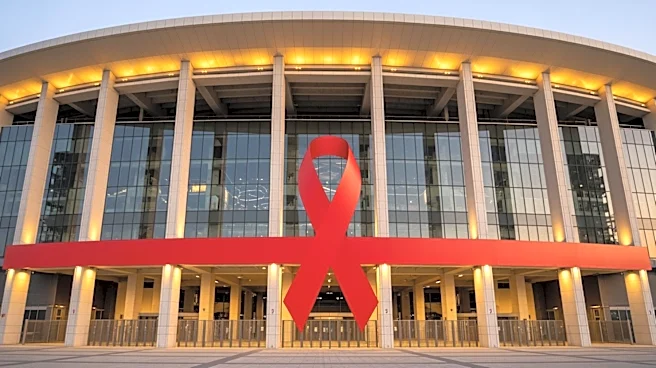
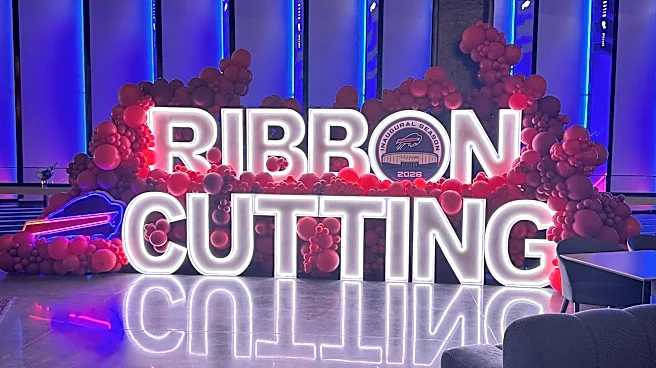
The Buffalo Bills have inaugurated their new $2.1 billion Highmark Stadium in Orchard Park, New York. The ribbon-cutting ceremony was marked by emotional speeches from team owner Terry Pegula and Mary Wilson, widow of the team's founder Ralph Wilson.
Terry Pegula acknowledged the contributions of his wife Kim, who was instrumental in the stadium's planning before suffering a cardiac arrest in 2022. The new stadium, which took three years to build, features modern amenities such as palatial lounges, wide concourses, and a curved roof that covers 60% of the seats. It replaces the old stadium, known for its utilitarian design, with a more intimate setting and reduced capacity from 73,000 to just over 60,000 seats. The stadium's design was inspired by Tottenham Hotspur's home in England, and it includes a switch from artificial turf to Kentucky bluegrass.
Why It's Important?
The opening of the new Highmark Stadium represents a significant investment in the Buffalo Bills' future and the local community. The project, partially funded by New York State and Erie County, underscores the importance of public-private partnerships in large-scale infrastructure projects. The modern facilities are expected to enhance the fan experience and potentially increase revenue through higher ticket sales and events. The stadium's construction also reflects a broader trend in the NFL towards more intimate and technologically advanced venues. This development could have economic implications for the region, potentially boosting local businesses and tourism.
What's Next?
The new stadium will host its first event, the Bills' annual 'Blue and Red Scrimmage,' on August 8, followed by preseason games against Carolina and Pittsburgh. The Bills' regular season home opener is scheduled for September 17 against the Detroit Lions. As the team settles into its new home, stakeholders will be watching to see how the new facilities impact team performance and fan engagement. The financial aspects, including the Pegulas covering $700 million in cost overruns, will also be scrutinized as a case study in stadium financing.