
What's Happening?
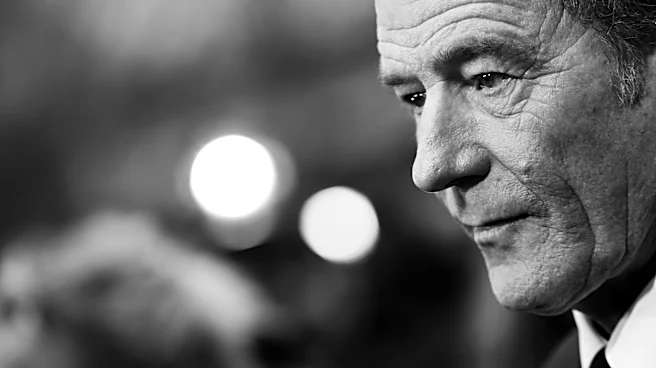
Actor Bryan Cranston recently discussed how his iconic role as Walter White in 'Breaking Bad' almost didn't happen. He revealed that if his previous show, 'Malcolm in the Middle,' had been renewed for
an eighth season in 2006, he would have been unavailable to take on the 'Breaking Bad' role. The network ultimately decided against another season of 'Malcolm in the Middle,' which freed Cranston to audition for and secure the part of Walter White. This reflection highlights the serendipitous nature of career-defining opportunities in the entertainment industry. Cranston also shared insights into his current involvement with T-Mobile's new T-Mix campaign, emphasizing his desire for clever, funny material and his active participation in shaping the campaign's tone and style alongside director Nick Ball and the clients. He stressed the importance of not doing anything he would be embarrassed about, a standard he applies to his professional life.
Why It's Important?
This anecdote from Bryan Cranston underscores the significant impact of timing and network decisions on an actor's career trajectory and, by extension, on the cultural landscape of television. 'Breaking Bad' became a critically acclaimed and commercially successful series, profoundly influencing television drama and solidifying Cranston's status as a leading actor. Had 'Malcolm in the Middle' continued, a different actor might have portrayed Walter White, potentially altering the show's reception and legacy. For the entertainment industry, this illustrates how the cancellation or renewal of one project can open doors for entirely new and impactful ventures. It also highlights the agency actors like Cranston seek in their commercial work, ensuring creative input and alignment with their personal brand, which can influence the effectiveness and public perception of advertising campaigns.
What's Next?
While Cranston's past career decisions are set, his current involvement in the T-Mobile T-Mix campaign suggests a continued presence in high-profile commercial endorsements. The success of this campaign, which debuted on November 5, will likely be monitored by T-Mobile and other brands considering celebrity partnerships. For Cranston, his approach to vetting projects and actively participating in their development indicates a strategic and discerning career management style. This could lead to more carefully selected roles in film and television, as well as continued engagement in projects where he can exert creative influence. The broader implications for the entertainment industry include a potential trend of established actors seeking more creative control and meaningful engagement in commercial ventures, moving beyond mere endorsement to active collaboration.
Beyond the Headlines
Cranston's story offers a deeper look into the often-unpredictable nature of success in Hollywood. It challenges the notion that a linear career path is always the most beneficial, demonstrating how perceived setbacks (like a show's cancellation) can lead to unforeseen and greater opportunities. This narrative can be inspiring for aspiring artists and professionals in any field, emphasizing the importance of persistence, patience, and being prepared for unexpected turns. Furthermore, his commitment to avoiding projects he'd be 'embarrassed about' speaks to a broader ethical consideration in celebrity endorsements, where personal integrity and brand alignment are increasingly valued. This approach can enhance public trust in both the celebrity and the products they represent, fostering a more authentic connection with audiences.