






What's Happening?
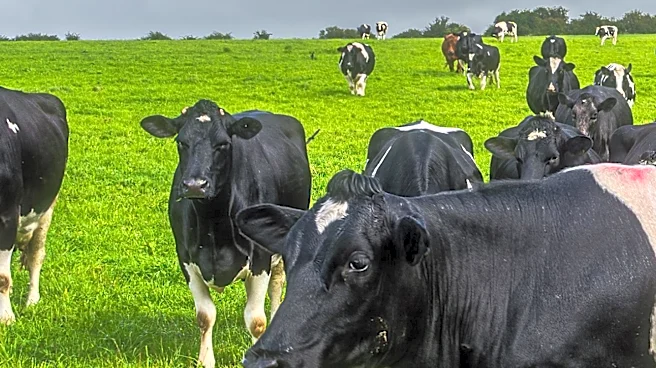
Prime Minister Shehbaz Sharif of Pakistan has approved a comprehensive plan aimed at significantly boosting the country's livestock exports. The strategy involves importing high-yield, superior-breed livestock, rearing them in specialized farms, and subsequently
exporting them. A key component of this initiative is the duty-free import of livestock for these farms. The plan also emphasizes the corporate restructuring of the livestock sector and the implementation of reforms with the expertise of private sector specialists. To ensure the integrity of the export process, a modern livestock tagging system will be introduced. Furthermore, the Prime Minister has directed the formulation of a detailed plan to eradicate Foot-and-Mouth Disease (FMD) within the next two weeks and stressed the importance of international certification for slaughterhouses, including third-party validation to meet global standards. The Ministry of National Food Security is tasked with collaborating with provincial governments to combat livestock diseases and improve the entire value chain for meat and livestock exports. The meeting highlighted that Pakistan possesses approximately 245 million livestock, valued at around Rs 5.5 trillion, contributing 14.97% to the national economy and 63.6% to the agricultural economy. Despite 8 million rural families being involved in livestock, small-scale rearing and a fragmented supply chain currently limit export potential. The government aims to increase meat exports, which stood at approximately $530 million in the 2025-26 fiscal year, primarily to Gulf countries, by targeting new markets like Malaysia, Saudi Arabia, and China.
Why It's Important?
This initiative is significant for Pakistan's economy, as the livestock sector is a major contributor to its agricultural and national GDP. By modernizing the sector and focusing on exports, Pakistan aims to unlock substantial economic growth and increase foreign exchange earnings. The emphasis on disease surveillance, FMD-free zones, and international certification directly addresses critical barriers to global market access for livestock products. For the U.S. and other international markets, this could mean a potential increase in competition or new sourcing options for meat and livestock products, depending on the success of Pakistan's export drive and its ability to meet stringent international health and safety standards. The focus on corporate restructuring and private sector involvement could also serve as a model for other developing nations looking to enhance their agricultural exports. The success of this plan could also influence global livestock trade dynamics, potentially leading to shifts in supply chains and pricing. The eradication of FMD is particularly crucial, as outbreaks of such diseases can severely disrupt international trade and lead to significant economic losses, as seen in other regions.
What's Next?
In the immediate future, the Ministry of National Food Security is expected to present a comprehensive plan for FMD eradication within the next two weeks. The government will also proceed with the establishment of specialized farms for imported livestock and the implementation of the modern livestock tagging system. Efforts will intensify to secure international certification for slaughterhouses, likely involving audits and compliance checks by international bodies. The government will also work on promoting feedlot farming, cold chain infrastructure, de-boning, and value-added products, with a target to further increase meat exports by 2028. Stakeholders, including federal ministers, advisors, and senior officials, will continue to monitor the progress and address any challenges in the implementation of these reforms. The success of these measures will determine Pakistan's ability to penetrate new markets and significantly boost its meat and livestock exports.
Beyond the Headlines
Beyond the immediate economic implications, this plan touches upon broader issues of food security, public health, and sustainable agricultural development. The focus on animal disease surveillance and FMD eradication is not only crucial for export but also for protecting domestic animal populations and preventing potential zoonotic disease transmission. The corporate restructuring of the livestock sector could lead to more efficient and ethical animal husbandry practices, potentially improving animal welfare standards. Furthermore, the drive to increase exports could empower rural communities involved in livestock rearing, provided the benefits are equitably distributed. However, the large-scale import of livestock and the establishment of specialized farms will require careful environmental impact assessments to ensure sustainability. The success of this ambitious plan will depend on robust governance, effective collaboration between government and private sectors, and continuous adherence to international health and safety protocols, which could set a precedent for other nations aiming to expand their agricultural export capabilities.