






What's Happening?
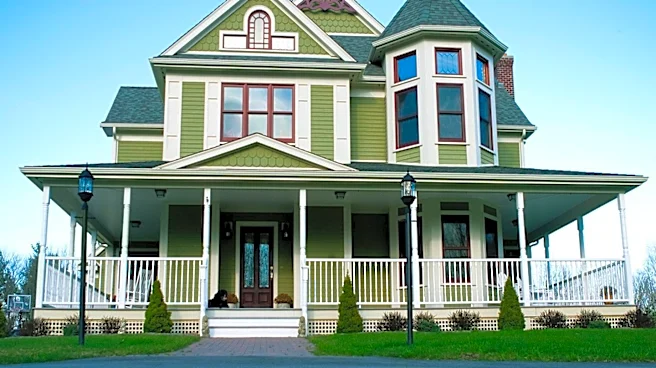
Rebecca Roucloux Avery, a 67-year-old retiree, purchased a 4,000-square-foot Victorian home built in 1894 in Vermont, Illinois, for $97,500. Despite owning a new home in Austin, Avery moved to be closer to family. She has already spent $85,000 restoring
just 1,000 square feet of the house, addressing significant issues such as a deteriorating foundation, a leaking roof, and a damaged interior from a basement fire. The previous owner had bought the house for $10,000 seven years prior, and it lacked basic amenities like air conditioning and a kitchen. Avery, along with her partner, is actively involved in the renovation, tackling tasks from electrical work to wallpaper removal and sanding. Neighbors have shown significant interest and appreciation for her efforts to preserve a piece of the town's history.
Why It's Important?
This story highlights the significant financial and personal investment required to preserve historic homes in the U.S., particularly in smaller towns. It underscores the often-unforeseen costs associated with maintaining older properties, which can quickly exceed the initial purchase price. For communities, the restoration of such landmarks is crucial for maintaining historical character and fostering local pride. Avery's decision to move closer to family and her subsequent engagement with the community through this project also illustrates the social value of homeownership beyond mere financial investment. Her efforts are not just about renovating a house but about contributing to the cultural fabric and historical continuity of a small Illinois town, demonstrating how individual actions can have a broader community impact.
What's Next?
Avery and her partner will continue the extensive renovation of the remaining 3,000 square feet of the Victorian home. Given the significant costs already incurred for foundational and structural repairs, they anticipate further substantial expenses. Their ongoing work will likely involve more interior restoration, including installing a new kitchen and addressing other amenities. The community's positive reaction suggests continued local support and interest in the project's progress. While Avery is not certain if this will be her 'forever home' due to its size and the physical demands of maintenance, her commitment to the restoration is expected to continue, potentially inspiring others in the community to undertake similar preservation efforts for historic properties.
Beyond the Headlines
The narrative of Avery's home restoration touches upon several deeper implications. It highlights the challenges and rewards of preserving architectural heritage in an era often focused on new construction. The project serves as a testament to the value of craftsmanship and the enduring appeal of historical design, contrasting with the disposable nature of some modern consumer goods. Furthermore, Avery's journey from a new Austin home to a dilapidated Victorian in Illinois, driven by a desire for family proximity, speaks to evolving priorities in retirement and the search for purpose beyond traditional career paths. The community's engagement with her project also underscores the role of historic homes as cultural anchors, fostering a sense of shared identity and continuity in small towns across the U.S.